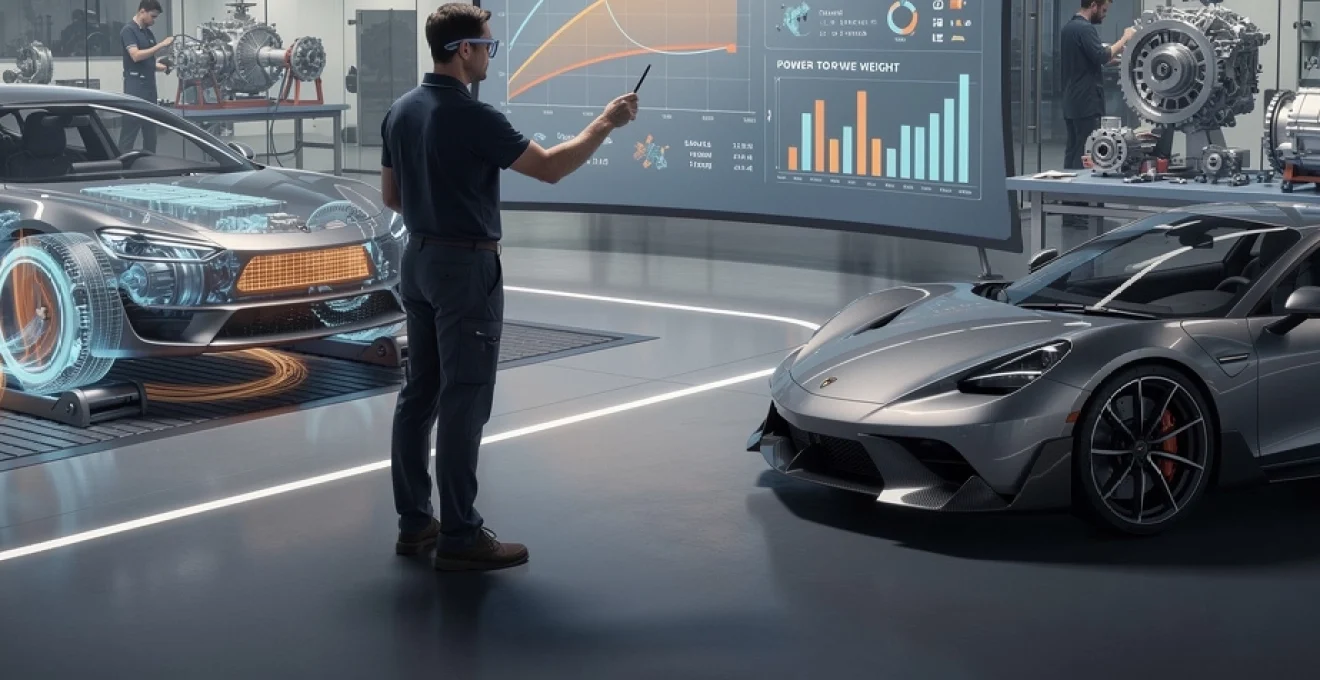
The relationship between power and performance in contemporary automobiles has evolved far beyond the simple horsepower figures that once dominated automotive marketing. Today’s sophisticated vehicles integrate multiple powertrain technologies, advanced electronic systems, and aerodynamic innovations that work collectively to deliver unprecedented performance capabilities. Understanding how these elements interact provides crucial insight into what makes modern vehicles exceptionally capable machines.
The automotive industry continues to push the boundaries of what’s possible, with manufacturers developing increasingly sophisticated methods to extract maximum performance from their powertrains. From the instant torque delivery of electric motors to the complex valve timing systems in modern internal combustion engines, every component plays a vital role in defining how a vehicle performs across different driving scenarios. This technological evolution has fundamentally changed how engineers approach vehicle development and how consumers evaluate automotive performance.
Engine power output metrics and performance correlation in contemporary automotive design
Modern automotive performance measurement extends well beyond traditional horsepower ratings, encompassing a comprehensive array of metrics that provide deeper insights into vehicle capabilities. Brake horsepower remains the standard measurement for engine output at the flywheel, while wheel horsepower represents the actual power delivered to the road surface after accounting for drivetrain losses. These measurements form the foundation for understanding real-world performance characteristics, but they represent only part of the complete performance picture.
The correlation between power output and vehicle performance depends heavily on how effectively that power can be transmitted to the road surface. Factors such as transmission efficiency, differential design, and electronic control systems all influence how engine power translates into acceleration, top speed, and overall driving dynamics. Modern vehicles achieve remarkable performance through the precise coordination of these systems, ensuring that maximum power reaches the wheels when and where it’s needed most.
Brake horsepower vs wheel horsepower analysis in tesla model S plaid and BMW M5 competition
The Tesla Model S Plaid demonstrates the efficiency advantages of electric powertrains, with minimal power losses between motor output and wheel delivery. Electric motors achieve efficiency ratings exceeding 95%, meaning the vast majority of generated power reaches the wheels without significant drivetrain losses. This efficiency advantage contributes to the Model S Plaid’s exceptional acceleration performance, delivering over 1,000 horsepower directly to the road surface with minimal energy waste.
In contrast, the BMW M5 Competition’s twin-turbocharged V8 engine experiences typical internal combustion engine power losses through the transmission, driveshaft, and differential systems. These mechanical components reduce wheel horsepower by approximately 15-20% compared to brake horsepower ratings, though sophisticated engineering minimises these losses through advanced transmission designs and optimised gear ratios that maximise power delivery efficiency across the rev range.
Torque curve characteristics and their impact on acceleration performance
Torque curve analysis reveals critical insights into how vehicles perform during real-world acceleration scenarios. Peak torque figures provide limited information compared to torque delivery characteristics across the entire rev range. Modern turbocharged engines often deliver maximum torque from as low as 1,500 rpm, maintaining consistent power delivery through mid-range acceleration phases where drivers spend most of their time.
Electric vehicles fundamentally alter traditional torque curve expectations by delivering maximum torque instantly from zero rpm. This characteristic eliminates the lag associated with internal combustion engines and provides immediate throttle response that dramatically improves acceleration feel and performance. The flat torque curve of electric motors ensures consistent power delivery regardless of vehicle speed or motor rpm, creating a uniquely responsive driving experience.
Power-to-weight ratio calculations in McLaren 720S and porsche 911 turbo S
Power-to-weight ratios provide the most accurate predictor of acceleration performance, offering insights beyond simple horsepower figures. The McLaren 720S achieves an exceptional power-to-weight ratio through extensive use of carbon fibre construction and advanced lightweight materials, resulting in a vehicle that accelerates from 0-60 mph in just 2.8 seconds despite weighing significantly less than comparable supercars.
The Porsche 911 Turbo S demonstrates how intelligent engineering can maximise power-to-weight efficiency through strategic weight distribution and advanced all-wheel-drive systems. While the 911 Turbo S carries more weight than the McLaren, its sophisticated launch control
continues to put its substantial power down with remarkable efficiency. Its rear-engine layout loads the driven wheels, while the active aerodynamics and adaptive suspension optimise traction under hard acceleration. The result is that, despite a slightly inferior power-to-weight ratio on paper compared with the McLaren 720S, the 911 Turbo S can match or even surpass its real-world sprint performance in less-than-ideal conditions, particularly on imperfect road surfaces where traction is the limiting factor rather than raw power.
Dynamometer testing standards and real-world performance validation
Dynamometer testing remains the primary method for quantifying engine and motor power in a controlled environment. Engine dynos measure brake horsepower at the crankshaft, while chassis dynos record wheel horsepower by loading the driven wheels on rollers. Standardised procedures such as SAE J1349 in North America or DIN 70020 in Europe define reference conditions for temperature, pressure, and humidity, and prescribe how corrections are applied so that power figures from different tests and laboratories remain comparable.
However, even the most precise dynamometer cannot fully replicate real-world variables that influence performance. Tyre temperature, road surface, wind resistance, altitude, and vehicle load all affect how much of the measured power actually translates into acceleration. This is why manufacturers increasingly complement dyno data with instrumented track testing using GPS-based performance loggers, high-speed data acquisition systems, and repeatable acceleration tests (0–60 mph, 0–100 km/h, quarter mile) to validate that claimed performance aligns with what drivers will experience on the road.
For enthusiasts and tuners, understanding the difference between corrected and uncorrected dyno figures is essential when evaluating upgrades or comparing vehicles. Corrected figures normalise for environmental conditions, while uncorrected numbers show what the car produced on that specific day. When a tuned car shows a modest increase in wheel horsepower yet feels dramatically quicker, factors such as a reshaped torque curve, reduced turbo lag, and revised gearbox mapping often explain the discrepancy. Ultimately, real-world validation—through repeated acceleration runs and in-gear pull measurements—remains the definitive benchmark for performance.
Powertrain technologies shaping modern vehicle performance dynamics
Power in modern vehicles is no longer defined by engine displacement alone. Instead, it is the product of sophisticated powertrain technologies that work together to maximise combustion efficiency, minimise losses, and deliver power exactly when the driver demands it. From advanced internal combustion engine (ICE) hardware to hybrid systems and state-of-the-art electric motors, each innovation influences how power is generated, managed, and deployed on the road. Understanding these systems helps you see why two cars with similar peak horsepower can feel completely different to drive.
Internal combustion engine advancements: variable valve timing and direct injection systems
Contemporary internal combustion engines extract far more power per litre than their predecessors thanks to technologies such as variable valve timing (VVT) and direct fuel injection. Variable valve timing systems, which may include variable valve lift as well, allow the engine to alter when and how far the intake and exhaust valves open. At low rpm, valve timing can be optimised for torque and efficiency, while at high rpm the system shifts to maximise airflow and thus peak power. This effectively gives one engine multiple “personalities”, improving flexibility without sacrificing top-end performance.
Direct injection takes this further by spraying fuel directly into the combustion chamber at very high pressure, rather than into the intake ports. This allows for more precise control of fuel quantity, spray pattern, and timing, which improves combustion efficiency, reduces knock, and supports higher compression ratios or boost pressures. The net effect is higher power output and better fuel efficiency from a smaller displacement engine. As a result, a modern 2.0-litre turbocharged engine with VVT and direct injection can rival or exceed the power and torque of an older 3.0-litre naturally aspirated unit while using significantly less fuel.
Hybrid powertrain integration in toyota prius prime and lexus LC 500h architecture
Hybrid systems illustrate how combining different power sources can transform vehicle performance and efficiency. The Toyota Prius Prime, for example, uses a relatively modest internal combustion engine paired with one or more electric motors and a battery pack. In everyday driving, the electric motor contributes instant torque at low speeds, while the petrol engine provides sustained power for higher-speed cruising. This allows the hybrid system to operate each component in its most efficient range, significantly reducing fuel consumption without sacrificing usable performance for commuting or urban driving.
The Lexus LC 500h takes a different approach, integrating a high-output V6 engine with a sophisticated multi-stage hybrid system designed to enhance both performance and efficiency. Its architecture simulates the feel of a multi-gear automatic transmission while using electric assist to fill torque gaps during shifts and at low rpm. The result is a grand tourer that delivers smooth, responsive acceleration and strong mid-range performance, despite having a smaller engine than its V8-powered LC 500 sibling. In both cases, hybrid technology uses electrical power not just to save fuel but also to shape the power delivery curve for a more refined and flexible driving experience.
Electric motor technology: permanent magnet synchronous motors in lucid air dream edition
Electric vehicles elevate the discussion of power and performance by using highly efficient electric motors instead of combustion engines. The Lucid Air Dream Edition showcases the capabilities of modern permanent magnet synchronous motors (PMSMs), which combine compact packaging, high power density, and exceptional efficiency. Each motor can deliver hundreds of kilowatts of power while weighing only a fraction of an equivalent internal combustion powertrain, contributing directly to an impressive power-to-weight ratio and instant acceleration.
PMSMs maintain high efficiency across a wide operating range, which means more of the battery’s energy is converted into usable wheel power. In the Lucid Air, this translates into over 1,000 horsepower and staggering acceleration times, while still delivering competitive driving range. Because electric motors can be controlled with extreme precision through power electronics, engineers can finely tune how power is delivered to each axle—or even each wheel in future architectures—shaping the car’s handling and stability characteristics in ways that would be impossible with mechanical systems alone.
Turbocharging and supercharging impact on power delivery characteristics
Forced induction—through turbocharging or supercharging—remains one of the most effective methods of increasing engine power without significantly increasing displacement. Turbochargers harness exhaust gas energy to compress incoming air, allowing more oxygen to enter the cylinders and thus supporting more fuel and higher power output. Superchargers, driven mechanically by the engine, provide a similar effect but with different response characteristics. Both systems effectively “shrink” the atmosphere, enabling smaller engines to behave like larger ones when required.
The trade-off lies in how and when this extra power becomes available. Traditional turbocharged engines suffered from turbo lag, a delay between throttle input and boost build-up. Modern designs mitigate this through smaller, quicker-spooling turbos, variable-geometry turbines, twin-scroll housings, and sophisticated boost control algorithms. Superchargers, by contrast, deliver near-instant boost but consume some engine power to drive them. In practice, manufacturers often choose or combine these technologies based on the desired character: a performance SUV might prioritise low-end torque and responsiveness, while a high-revving sports car might accept some lag in exchange for explosive top-end power.
Transmission technology evolution: dual-clutch systems in volkswagen golf R and audi RS3
Even the most advanced engine cannot deliver its full performance potential without an equally capable transmission. Dual-clutch transmissions (DCTs), as used in vehicles like the Volkswagen Golf R and Audi RS3, bridge the gap between the direct engagement of a manual gearbox and the convenience of an automatic. A DCT uses two separate clutches—one for odd-numbered gears and one for even—to preselect the next gear while the current one is engaged. When the driver or control system commands a shift, the clutches swap almost instantaneously, resulting in lightning-fast gear changes with minimal interruption to power delivery.
This rapid, uninterrupted transfer of torque enhances both acceleration and drivability. On a performance-oriented car such as the Golf R or RS3, launch control and aggressive shift strategies allow the engine to remain in its optimal power band during hard acceleration runs. In daily driving, the same transmission can prioritise smoothness and low engine speeds to improve fuel efficiency. As a result, modern dual-clutch systems play a crucial role in defining how power feels from the driver’s seat, shaping everything from 0–60 mph times to overtaking responses.
Aerodynamic efficiency and power requirements in high-performance applications
At higher speeds, aerodynamics becomes as important as raw power in determining vehicle performance. The force of aerodynamic drag increases roughly with the square of speed, while the power required to overcome that drag increases with the cube of speed. This means that doubling a car’s top speed can require up to eight times more power, all else being equal. High-performance vehicles therefore rely on carefully optimised body shapes, active aerodynamic elements, and underbody management to reduce drag while still generating sufficient downforce for stability.
Active systems such as deployable rear wings, adjustable front splitters, and adaptive grille shutters allow a car to alter its aerodynamic profile depending on the driving situation. At motorway speeds, the vehicle might minimise drag to improve efficiency and range; under hard braking or cornering, the same system can increase downforce to press the tyres into the road. From a driver’s perspective, this means more of the engine’s power is available for acceleration rather than being wasted fighting the air, especially in real-world conditions where a balance between efficiency and grip is essential.
Electronic control systems optimising power distribution and vehicle dynamics
Modern vehicles depend on a network of electronic control systems to manage how power is distributed and how the car responds to driver inputs and changing road conditions. Rather than treating the engine, transmission, brakes, and suspension as separate entities, contemporary architectures integrate them through high-speed communication networks and central vehicle dynamics controllers. The result is a car that can continuously adjust its behaviour—often dozens or even hundreds of times per second—to maintain traction, stability, and optimal performance.
Traction control systems and electronic stability programme integration
Traction control systems (TCS) and electronic stability programmes (ESP or ESC) are central to harnessing modern power levels safely. Traction control monitors wheel speeds and throttle input to detect when a driven wheel begins to slip, then reduces engine power or applies braking to restore grip. Stability control extends this concept by measuring yaw rate, steering angle, lateral acceleration, and other parameters to determine whether the car is following the driver’s intended path. If it detects understeer or oversteer, it can selectively brake individual wheels and adjust engine output to bring the vehicle back into line.
From the driver’s perspective, these systems mean that more power can be used more often, even on wet or uneven surfaces. Instead of tiptoeing around in a high-performance car, you can accelerate assertively while the electronics quietly manage wheelspin and stability. Importantly, manufacturers now tune these systems to be more nuanced, allowing a degree of slip in sport modes to keep the driving experience engaging while still providing a safety net. It’s a bit like having an invisible driving coach that steps in only when you’ve pushed a little too far.
All-wheel drive torque vectoring in audi quattro and Mercedes-AMG 4MATIC+ systems
All-wheel drive (AWD) systems have evolved far beyond simple front/rear power splits. Modern performance architectures, such as Audi’s latest Quattro variants and Mercedes-AMG’s 4MATIC+ systems, employ sophisticated torque vectoring to actively distribute power not just between axles but also between individual wheels. Using electronic multi-plate clutches, active differentials, and brake-based interventions, these systems can send more power to the wheels with the most grip or even intentionally oversupply torque to an outside rear wheel to help pivot the car through a corner.
This dynamic torque distribution has a profound impact on how a vehicle puts down its power. In a powerful sedan or coupe, AWD with torque vectoring allows full-throttle acceleration out of tight bends that would overwhelm a traditional rear-wheel-drive setup on the same tyres. On slippery surfaces, the systems react in milliseconds to maintain forward momentum without excessive wheelspin. As a result, cars equipped with advanced torque vectoring often feel both more secure and more agile, turning what could be unruly power outputs into accessible, confidence-inspiring performance.
Launch control algorithms in ferrari SF90 stradale and lamborghini huracán performante
Launch control systems exemplify how software can extract every last fraction of performance from a vehicle’s powertrain. In cars such as the Ferrari SF90 Stradale and Lamborghini Huracán Performante, launch control coordinates engine output, clutch engagement, gearbox ratios, and traction control thresholds to deliver the fastest possible acceleration from a standstill. The system carefully balances wheel slip—some of which is actually beneficial for maximum traction—with drivetrain protection and driveline durability requirements.
From the driver’s seat, the process might seem simple: engage launch mode, hold the brake, floor the accelerator, and then release the brake when prompted. Behind the scenes, however, complex algorithms monitor grip levels, tyre temperature, and even gradient to fine-tune how much torque is unleashed and when. This level of control explains how modern supercars can consistently achieve sub-three-second 0–60 mph times on standard tyres, something that would have been almost unimaginable a generation ago.
Adaptive suspension systems and power management in McLaren active dynamics
Suspension technology might not appear directly linked to power, yet it plays a critical role in how effectively that power can be used. McLaren’s Active Dynamics systems, for instance, integrate adaptive dampers, roll control, and powertrain settings into a coherent suite of driving modes. By monitoring body movement, wheel travel, and steering inputs, the system adjusts damping rates and chassis stiffness in real time to keep the tyres in optimal contact with the road.
When you select a sport or track mode, the suspension stiffens, body roll is reduced, and throttle and gearbox maps become more aggressive. This allows you to exploit more of the available engine power without destabilising the car. In comfort settings, the same vehicle softens its responses, prioritising ride quality and efficiency. The synergy between adaptive suspension and power management means modern performance cars can be both compliant daily drivers and razor-sharp track tools at the press of a button, rather than forcing you to choose one compromise setup.
Fuel efficiency optimisation through intelligent power management systems
With tightening emissions regulations and increasing consumer focus on running costs, intelligent power management systems have become as crucial as outright horsepower in modern vehicle design. These systems coordinate engine operation, transmission shift strategies, electrical loads, and, in hybrids, the flow of energy between battery and motor. The goal is to provide enough power for the current driving situation while minimising unnecessary fuel consumption or energy use.
Examples include cylinder deactivation in V8 and V12 engines, where half the cylinders are shut down under light loads, and coasting or sailing modes that decouple the engine from the drivetrain when you lift off the accelerator at speed. Start-stop systems prevent idling in traffic, while predictive energy management in plug-in hybrids uses GPS and route data to decide when to deploy electric power or recharge the battery. For drivers, the practical takeaway is that selecting the appropriate drive mode—eco, comfort, or sport—can materially change how and when power is delivered, allowing you to prioritise efficiency on the commute and performance when the road opens up.
Future power technologies: hydrogen fuel cells and solid-state battery integration
The next decade will see further shifts in how power defines performance in modern vehicles, driven by emerging technologies such as hydrogen fuel cells and solid-state batteries. Hydrogen fuel cell electric vehicles (FCEVs) generate electricity on board by combining hydrogen and oxygen in a chemical reaction, with water vapour as the only direct emission. Because fuel cells can deliver a steady supply of electrical power and refuelling is rapid, they offer the potential for long-range, high-usage applications—such as heavy-duty trucks or performance grand tourers—where current battery technology remains a constraint.
Solid-state batteries, meanwhile, promise higher energy density, faster charging, and improved safety compared with today’s lithium-ion packs. By replacing the liquid electrolyte with a solid material, engineers can pack more energy into a given volume, reduce cooling requirements, and lower the risk of thermal runaway. For performance vehicles, this means the possibility of combining supercar-level power outputs with reduced weight and greater repeatability of acceleration runs, even under heavy use. Imagine an electric sports car that can lap a circuit repeatedly without significant power fade due to heat or state-of-charge limitations—this is the kind of future solid-state technology aims to unlock.
As hydrogen and advanced battery systems mature, we can expect powertrain architectures to become even more diverse. Some vehicles may pair compact combustion engines with fuel cells for auxiliary power; others may use multiple electric motor layouts with extremely fine-grained torque vectoring. In each case, the fundamental question remains the same: how efficiently and intelligently can the vehicle convert energy into forward motion, and how effectively can it deploy that power to deliver the performance characteristics drivers expect in the next generation of modern vehicles?