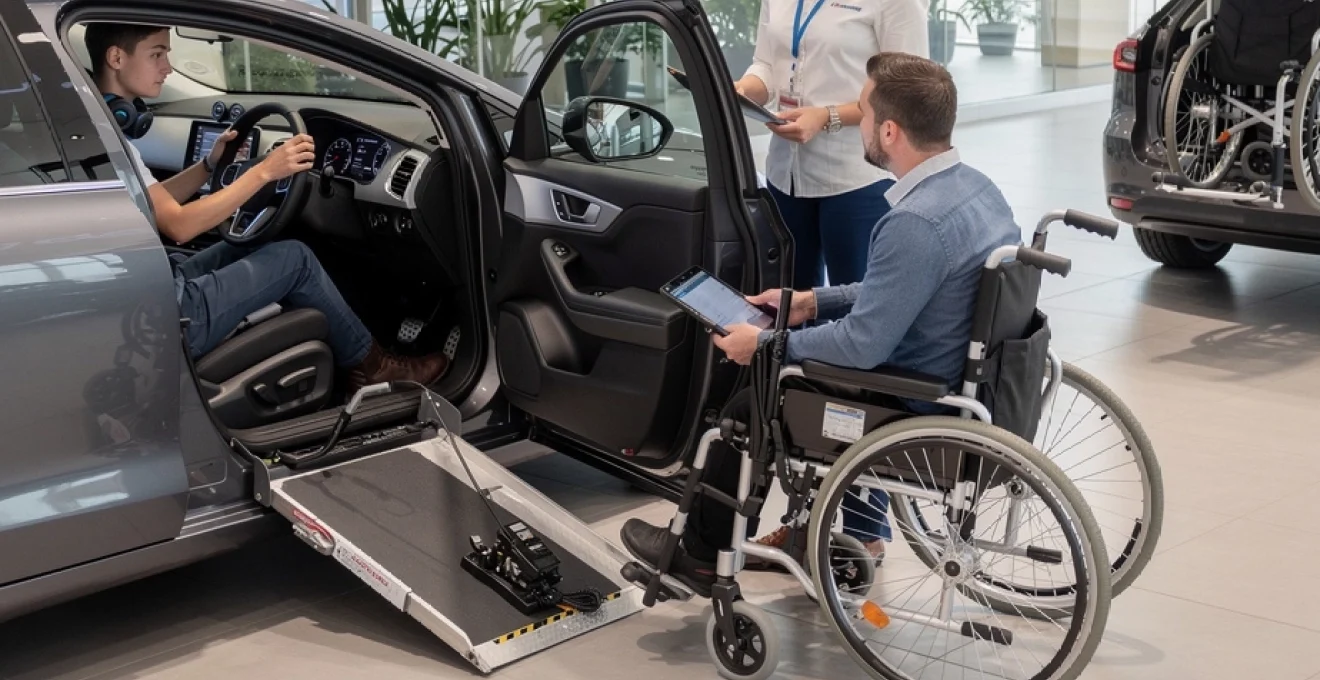
The automotive landscape is experiencing a profound transformation, driven not only by technological innovation but also by an increasingly diverse driver population with unique requirements. Atypical drivers—those who require vehicle modifications, adaptive equipment, or specialized support due to physical, sensory, cognitive, or temporary medical conditions—represent a significant and growing segment of the market. Understanding their specific needs isn’t merely a matter of compliance or corporate responsibility; it’s essential for dealers, manufacturers, and service providers who recognize that accessibility represents both a moral imperative and a substantial commercial opportunity. As mobility solutions become more sophisticated and legislation continues to evolve, the automotive industry faces an exciting challenge: how to serve this diverse population with the expertise, empathy, and innovation it deserves.
Defining atypical driver profiles: physical disabilities and adaptive vehicle requirements
Atypical drivers encompass a remarkably diverse group of individuals whose driving needs differ from conventional assumptions about vehicle operation. This population includes people with permanent physical disabilities, sensory impairments, cognitive differences, and those experiencing temporary medical restrictions. Each category presents distinct challenges and requires tailored solutions that go far beyond standard vehicle configurations. The term “atypical” itself reflects not a deficit but rather a different set of requirements—a recognition that driving capability exists across a spectrum of human ability and that vehicles should adapt to drivers, not the other way around.
Recent statistics from the Department for Transport indicate that approximately 1.2 million disabled people in the UK hold valid driving licenses, with many more potential drivers who could benefit from appropriate vehicle adaptations. This represents a substantial market segment that demands specialized knowledge, equipment, and service approaches. For dealerships and manufacturers, understanding these profiles means recognizing that accessibility isn’t a niche concern but rather a fundamental aspect of inclusive mobility. The question isn’t whether you should cater to atypical drivers, but rather how effectively you can meet their sophisticated and varied requirements.
Mobility impairments: hand controls, Left-Foot accelerators and steering modifications
Mobility impairments affecting the lower limbs are among the most common conditions requiring vehicle adaptation. Drivers with paraplegia, lower limb amputations, or conditions like multiple sclerosis that affect leg function often require hand control systems that relocate acceleration and braking functions to the steering column or dashboard area. These systems come in various configurations, with push-pull mechanisms being the most prevalent—pushing the lever activates the brake, while pulling engages the accelerator. Alternative designs include push-right-angle systems and electronic variants that offer lighter touch operation for those with reduced upper body strength.
For drivers who retain partial leg function but cannot safely operate a conventional pedal arrangement, left-foot accelerator pedals offer an effective solution. These modifications allow someone with a compromised right leg to operate the accelerator with their left foot while maintaining standard braking function. Steering modifications represent another critical adaptation category, ranging from simple spinner knobs that enable one-handed steering to sophisticated reduced-effort power steering systems and even joystick-style controls for drivers with severely limited upper limb mobility. Each modification must be precisely matched to the driver’s capabilities and undergoes rigorous safety testing before certification.
Visual and hearing impairments: supplementary sensory systems and dashboard adaptations
While complete blindness precludes driving under current UK regulations, many drivers with partial visual impairments can operate vehicles safely with appropriate adaptations. Enhanced visual display systems, including larger digital dashboards with high-contrast displays and adjustable font sizes, help drivers with reduced visual acuity access critical vehicle information. Blind-spot monitoring systems, originally developed as convenience features, prove particularly valuable for drivers with restricted peripheral vision, providing auditory and tactile warnings about vehicles in adjacent lanes.
Hearing-impaired drivers face different challenges, primarily related to situational awareness and emergency vehicle detection. Modern adaptations include visual alert systems that translate auditory warnings—from reversing sensors to emergency vehicle sirens—into visual displays on the dashboard or windscreen. Some advanced systems utilize vibration alerts integrated into the driver’s seat or steering wheel, providing tactile notifications that supplement or replace auditory cues. These technologies demonstrate how automotive innovation can transform challenges into manageable considerations, enabling safe driving across a broader spectrum of sensory capabilities.
Cognitive and neurological conditions:
Cognitive and neurological conditions: autism spectrum disorder and ADHD driving considerations
Cognitive and neurological conditions such as Autism Spectrum Disorder (ASD), ADHD, acquired brain injuries, or certain learning differences can affect how a driver processes information, manages distractions, and responds to unpredictable situations on the road. Unlike obvious physical disabilities, these needs are often invisible, which means they are frequently overlooked in standard dealer interactions and test-drive processes. Yet, for many atypical drivers, challenges with sensory overload, executive function, or impulse control can be just as significant as a mobility impairment when it comes to safe, confident driving.
For autistic drivers, for example, driving can involve managing intense sensory input—bright lights, loud traffic, complex signage—which can lead to fatigue and anxiety. Structured routines, clear road layouts, and predictable vehicle behaviour are especially important. Drivers with ADHD may struggle more with sustained attention and distraction, so features like lane-keeping assistance, adaptive cruise control, and clear, uncluttered dashboard layouts can make a substantial difference. In both cases, the goal is not to “compensate” for a deficit, but to create an in-car environment that supports the driver’s natural way of processing information.
Best practice for supporting these atypical drivers starts with the assessment phase. Occupational therapists and specialist driving assessors can help determine which adaptive technologies and training approaches are most appropriate, such as minimising in-cabin alerts, simplifying infotainment menus, or tailoring driver-assistance settings. Dealers who understand these considerations can schedule quieter test-drive times, offer extended familiarisation with controls, and explain safety technologies in calm, straightforward language. By doing so, you not only support safety but also reduce the stress that can otherwise prevent capable individuals from driving at all.
Temporary medical restrictions: post-surgery recovery and rehabilitation driving protocols
Not all atypical drivers live with permanent conditions. Temporary medical restrictions—following surgery, injury, or acute illness—can change driving capabilities for weeks or months. Common examples include lower-limb fractures, joint replacements, abdominal surgery, and cardiac procedures, all of which may affect strength, reaction time, or the ability to perform emergency manoeuvres. In these situations, the primary concern is ensuring that the driver resumes driving only when medically safe and, where necessary, with short-term vehicle adaptations that bridge the recovery period.
Clinical guidelines from surgeons and physiotherapists often specify minimum timeframes before driving can resume, but these are general estimates rather than one-size-fits-all rules. Pain medication, especially opioids, can impair judgement and reaction time, making early driving unsafe even if physical movement seems adequate. Temporary adaptations such as left-foot accelerators, steering knobs, or secondary mirrors can help drivers who are regaining strength or range of motion, provided they have been assessed and trained in their safe use. In some cases, automatic transmissions or higher seating positions alone can provide enough support during recovery.
From a practical standpoint, communication between the driver, their healthcare team, and their insurer is crucial. Drivers must understand any legal duty to inform licensing authorities of significant medical conditions and be honest about their functional abilities. Dealers and mobility specialists can add value by offering short-term lease solutions or Motability-compatible options for those expecting recovery to take several months. Thinking ahead—planning adaptations, insurance cover, and a staged return to driving—can turn a stressful period into a managed transition rather than an abrupt loss of independence.
Vehicle modification technologies for accessibility compliance
Once an atypical driver’s needs are properly assessed, the next step is to select and install appropriate vehicle modification technologies that meet both safety and regulatory standards. In the UK and across Europe, accessibility compliance is shaped by a mix of national legislation, type-approval rules, and best-practice standards such as those promoted by the DVSA and Motability. For dealers and conversion specialists, the challenge is to align cutting-edge adaptive technology with these frameworks while maintaining manufacturer warranties and crash-test integrity.
Modern accessibility solutions range from relatively simple pedal or steering adaptations to full wheelchair-accessible vehicle (WAV) conversions with re-engineered floors, ramps, and seating layouts. Think of the base vehicle as a platform and the conversion as a tailored suit: the underlying structure is familiar, but the fit is unique to each driver. High-quality conversions consider ingress and egress, occupant protection, load distribution, and ease of everyday use, not just whether a wheelchair or mobility aid can technically fit inside.
Compliance is not just a box-ticking exercise. Poorly fitted or uncertified adaptations can compromise airbag deployment, seatbelt geometry, or braking performance, which in turn can affect insurance cover and legal liability. That’s why reputable conversion companies invest heavily in engineering, CAD modelling, and crash simulations, and why insurers often insist on documentation from recognised installers. When you choose technologies that are both user-centred and standards-compliant, you help atypical drivers remain mobile without increasing their risk exposure.
Wheelchair access systems: ramps, hoists and docking mechanisms by BraunAbility and VMI
For wheelchair users who drive from their chair or travel as passengers, wheelchair access systems are the foundation of a safe and dignified mobility solution. Leading brands such as BraunAbility and Vantage Mobility International (VMI) have set industry benchmarks for reliability, crash safety, and ease of use. Their systems typically include either rear- or side-entry ramps, powered lifts, or internal hoists, combined with secure docking mechanisms that lock the wheelchair in place at a designated driving or passenger position.
Ramps can be manual or powered, with low ramp angles and high load capacities designed to handle modern powered wheelchairs. Side-entry WAVs often sacrifice a row of seats to create a central “corridor” where the wheelchair user can manoeuvre into the driver or front-passenger position, while rear-entry designs maintain more of the original seating but require additional space behind the vehicle. Hoists, by contrast, lift the wheelchair into the boot or cabin, allowing the user to transfer into a standard seat but still carry their chair with them. The choice between these options depends on the driver’s upper-body strength, transfer ability, and preferred level of independence.
Docking systems—essentially heavy-duty, crash-tested clamps or brackets—are critical for safety. They function like a seatbelt for the wheelchair itself, preventing forward or lateral movement in a collision. Many BraunAbility and VMI docks use automatic locking mechanisms that engage when the chair rolls into position and release via remote or dashboard switch, limiting the need for awkward manual tie-downs. Dealers and mobility advisers should work with specialist assessors to ensure that ramp width, door height, and docking positions reflect both the dimensions of the user’s wheelchair and their long-term comfort and safety needs.
Electronic hand control systems: push-pull vs push-right-angle accelerator configurations
Hand controls are among the most recognisable adaptations for drivers with lower-limb impairments. Traditional mechanical systems have been used reliably for decades, but electronic hand controls are now offering smoother operation, finer control, and better integration with modern drive-by-wire vehicles. Understanding the core configurations—particularly push-pull and push-right-angle accelerators—is essential when matching a system to an atypical driver’s physical capabilities and driving style.
Push-pull controls are straightforward: pulling the lever towards you applies the accelerator, while pushing it away engages the brake. For many drivers this mimics the intuitive “towards means go, away means stop” logic and requires relatively modest strength. Push-right-angle controls, by contrast, require the user to push the lever sideways or at a right angle to accelerate, while still pushing forward to brake. This configuration can reduce the risk of accidentally applying throttle while braking and may be preferred by drivers with specific shoulder or wrist limitations.
Electronic systems replace or supplement mechanical linkages with sensors and actuators that communicate with the vehicle’s throttle and braking systems. The result can be a lighter touch, programmable resistance, and, in some cases, integration with steering-mounted controls or joysticks. However, because these systems interface directly with critical vehicle functions, installation and calibration must be carried out by certified technicians, and any changes usually require notifying the insurer and, in some cases, the licensing authority. For the driver, the benefit is a more natural, less fatiguing driving experience—especially on longer journeys—while maintaining full control and compliance with safety standards.
Secondary control relocation: touch-pad interfaces and satellite switch panels
Secondary controls—indicators, wipers, lights, horn, infotainment, and climate settings—can be surprisingly challenging for atypical drivers with limited reach, dexterity, or muscle strength. In a standard car, these functions are scattered across stalks, buttons, and dials that require both fine motor skills and frequent hand movements away from the steering wheel. For some drivers, especially those with upper-limb impairments, this layout is not just inconvenient; it is unsafe.
Relocation systems address this problem by grouping key functions onto a single, easily reached interface. Touch-pad panels can be mounted near the steering wheel, on the door armrest, or even on a lap-tray, allowing drivers to activate indicators, lights, or wipers with minimal movement. Satellite switch panels—small pods attached to spinner knobs or adapted steering wheels—put essential functions literally at the driver’s fingertips, reducing the need to let go of the primary control. Many of these systems use large, backlit buttons with tactile feedback to support drivers with visual or sensory processing challenges.
Modern secondary control systems often integrate via CAN-bus connections, meaning they can communicate with the vehicle’s existing electronics without extensive rewiring. This reduces installation time and preserves diagnostic functionality for servicing. When you design a control layout around the driver rather than the factory dashboard, you effectively re-map the cockpit to fit their abilities—much like remapping a keyboard for a different language—while maintaining full compliance with lighting and signalling regulations.
Transfer seat bases and swivel mechanisms: turny evo and carospeed menox solutions
For ambulatory wheelchair users or those with reduced mobility who can still perform standing pivots or assisted transfers, transfer seat bases and swivel mechanisms play a key role. Systems such as the Turny Evo allow the front passenger or driver seat to rotate, extend out of the doorway, and lower towards the pavement, creating a stable, accessible platform for getting in and out. Instead of climbing up into a vehicle, the user effectively sits down at their natural height and is then lifted and rotated into position with minimal strain.
Turny Evo units are particularly popular in MPVs and SUVs, where higher seating positions can otherwise be a barrier. By controlling the seat movement via a handheld remote, users and carers can adjust speed and stop positions for comfort. Swivel-only bases, which rotate the seat without lowering it, can be more cost-effective but may require more physical effort or a compatible vehicle height. In both cases, the priority is to maintain correct seat-belt geometry and airbag positioning, which is why these systems are thoroughly tested with specific vehicle models.
Complementary products such as Carospeed Menox offer integrated hand controls mounted to the steering column, creating a cohesive driving station for those who also need pedal alternatives. When transfer seats and hand controls are planned together, the driver’s posture, reach, and line of sight can be optimised, reducing fatigue and improving reaction time. This holistic approach is analogous to an ergonomic office workstation assessment: when each component—seat, controls, displays—is aligned with the user’s body, performance and comfort both improve.
Insurance underwriting challenges for modified and adapted vehicles
Insuring a modified or adapted vehicle is often more complex than insuring a standard car, even when the ultimate goal of the adaptations is to improve safety. From an underwriting perspective, any departure from factory specifications introduces additional variables: unknown repair costs, non-standard parts, and potential changes to risk exposure. As a result, some mainstream insurers are cautious about covering heavily adapted vehicles or may apply higher premiums, exclusions, or specialist referral routes.
For atypical drivers, this landscape can feel frustrating. Why should a carefully assessed driver using crash-tested adaptations face more hurdles than a typical driver adding performance modifications? The answer lies in data: whereas mainstream insurers have vast datasets on standard vehicles and typical claims patterns, the number of highly adapted vehicles is smaller, and claims histories are more difficult to generalise. Specialist disability and WAV insurers fill this gap by building expertise and actuarial models specifically around mobility adaptations, often delivering more competitive and appropriate cover.
To navigate these challenges, transparency is essential. Drivers must declare all modifications, however minor they may seem, including hand controls, seats, ramps, docking systems, and secondary control relocations. Undeclared adaptations can invalidate cover in the event of a claim. On the positive side, many insurers view professionally installed, documented adaptations—especially those that clearly improve control or reduce exposure to risk—as neutral or even risk-reducing. Working with recognised conversion centres and keeping all certification, invoices, and engineering reports on file can significantly streamline the underwriting and claims process.
Specialist dealers and conversion centres: allied mobility, brotherwood and GM coachwork
Because atypical drivers often require complex, integrated solutions rather than single off-the-shelf products, specialist dealers and conversion centres play a pivotal role in the mobility ecosystem. Companies such as Allied Mobility, Brotherwood, and GM Coachwork have built reputations on deep technical expertise, extensive product ranges, and close collaboration with healthcare professionals, Motability operations, and insurers. For many customers, these organisations function not just as suppliers, but as long-term partners in maintaining independence.
Allied Mobility, for example, focuses heavily on wheelchair-accessible vehicles, offering both new and nearly new WAVs configured for a range of needs—from simple rear-entry family vehicles to advanced drive-from-wheelchair solutions. Brotherwood is renowned for its low-floor conversions, engineered to preserve ride quality and headroom, which is particularly important for taller wheelchair users or those using bulkier powered chairs. GM Coachwork provides a broader spectrum of adaptations, including minibuses, bespoke seating layouts, and complex driving adaptations for individual and fleet customers alike.
What sets these specialist centres apart is their consultative approach. Rather than simply “selling a car,” they typically offer home demonstrations, multi-stage assessments, and coordination with occupational therapists and driving assessors. You might think of them as the equivalent of a specialist clinic within the wider healthcare system: they concentrate knowledge, tooling, and experience so that each vehicle leaving the workshop is safe, compliant, and genuinely fit for purpose. For dealers and general garages, partnering with such centres or referring customers to them can enhance service offerings without diluting core competencies.
Motability scheme navigation: eligibility criteria and advanced payment structures
In the UK, the Motability Scheme is one of the most significant enablers of accessible driving, allowing eligible disabled people to exchange their mobility allowance for a worry-free lease of a car, WAV, scooter, or powered wheelchair. For atypical drivers and their families, understanding how to navigate Motability’s eligibility criteria, advanced payment options, and adaptation allowances can make the difference between an unaffordable dream and a practical reality. Dealers who are fluent in this process can provide invaluable guidance at the point of sale.
Motability agreements typically include insurance, servicing, tyres, and breakdown cover, simplifying budgeting and reducing administrative burden. However, more complex adaptations and higher-specification WAVs may require an upfront advance payment. Balancing the desire for the “perfect” solution with financial realities is often a collaborative process involving the customer, the dealer, and, where necessary, external funders such as charities or local authorities. When approached with empathy and clear information, this process can empower customers rather than overwhelm them.
Personal independence payment and disability living allowance qualification routes
Eligibility for the Motability Scheme is currently tied to specific mobility-related benefits. In most cases, this means the higher-rate mobility component of Disability Living Allowance (DLA), the enhanced-rate mobility component of Personal Independence Payment (PIP), the War Pensioners’ Mobility Supplement, or the Armed Forces Independence Payment. Claimants must have at least 12 months of benefit award remaining to join the scheme, ensuring that the three- or five-year lease period is financially underpinned.
For many potential atypical drivers and their families, the PIP or DLA application and assessment process can be daunting. Medical evidence, functional assessments, and sometimes appeals may be involved, and decisions about mobility components directly affect access to Motability. Dealers cannot provide benefits advice, but they can signpost customers to independent support organisations, disability charities, or welfare rights advisers who specialise in these processes. Once a qualifying award is in place, enrolling on the scheme is relatively straightforward and can often be initiated directly within participating dealerships.
It is worth noting that Motability is not limited to drivers; many beneficiaries are passengers in vehicles driven by nominated carers or family members. This widens the scope of atypical driving needs—seating layouts, entry points, and restraint systems must suit the disabled person even if they never sit behind the wheel. Understanding these nuances helps sales teams ask the right questions and match customers to appropriate vehicles without making assumptions based solely on who will sign the lease.
Adaptation allowance limits and additional private funding requirements
Motability offers an adaptation grant system to help cover the cost of certain essential adaptations where the standard allowance or customer resources are not sufficient. However, these grants are means-tested and not guaranteed, and the scheme must prioritise adaptations that are deemed necessary for access, safety, or basic vehicle operation. High-specification or luxury features, or adaptations chosen primarily for convenience rather than necessity, may fall outside grant funding limits, leaving customers to self-fund any difference.
In practice, this often means that simpler driving adaptations—such as basic hand controls, steering aids, or pedal modifications—can be fully or largely covered, especially when fitted at the start of a new lease. More complex or bespoke solutions, like extensive WAV conversions or advanced electronic control systems, may incur higher advance payments or additional contributions. Dealers and conversion partners should provide clear, itemised quotes and timescales so that customers can make informed choices and explore potential top-up funding from charities, crowdfunding, or local authority schemes.
When discussing budgets with customers, sensitivity is crucial. Many atypical drivers and families are balancing healthcare costs, reduced earning capacity, and daily living expenses. Framing conversations around value—how a particular adaptation supports independence, employment, or caregiving—rather than around “extras” can make these decisions feel more grounded. Ultimately, a transparent dialogue about adaptation allowances and possible shortfalls helps avoid last-minute surprises and fosters trust.
Vehicle return conditions and modification ownership transfer protocols
At the end of a Motability lease or any long-term hire arrangement, questions naturally arise about what happens to adapted vehicles and their installed equipment. Standard Motability policy is that the vehicle is returned, inspected, and then either sold on or, in some cases, re-allocated within the WAV network. Many permanent adaptations remain with the vehicle, contributing to its resale value in the specialist used market, while portable items may be removed and reused or recycled as appropriate.
For customers, understanding the distinction between “vehicle-bound” adaptations and removable equipment is important. Items such as lowered floors, integrated ramps, or structural seat mounts are usually considered part of the vehicle and stay with it upon return, whereas some hoists, hand controls, or restraint systems can be de-installed and potentially transferred to a new vehicle—subject to technical compatibility and safety checks. Motability and conversion partners can advise on which components can realistically be reused and whether any ownership transfer costs apply.
Outside the Motability Scheme, similar principles apply when selling or trading in a privately funded adapted vehicle. Sellers should disclose all modifications, provide associated documentation, and consider whether to market the vehicle within specialist channels where its adaptations are valued rather than treated as anomalies. In some cases, returning a vehicle closer to standard form—by removing non-essential adaptations—can broaden its appeal, while in others, retaining the full adapted configuration makes it particularly attractive to another atypical driver. Clear protocols around ownership and transfer ensure that safety, traceability, and insurance compatibility are preserved throughout the vehicle’s lifecycle.
Emerging autonomous vehicle technologies: level 3–5 automation for accessibility enhancement
Looking ahead, autonomous vehicle technologies hold enormous promise for atypical drivers and non-drivers alike. Advanced driver-assistance systems (ADAS)—such as adaptive cruise control, lane-keeping assist, automated emergency braking, and traffic-jam assist—are already moving us into Level 2 and early Level 3 automation territory. For many people with physical or cognitive impairments, these features effectively act as an extra pair of eyes, hands, and feet, reducing workload and providing a safety net when concentration lapses or quick reactions are challenging.
True Level 4 and Level 5 automation—where the vehicle can handle all aspects of driving in defined conditions, or in all conditions—could be transformative. Imagine a world in which a person who cannot currently obtain a licence due to a severe disability can still summon a vehicle that safely transports them door-to-door without the need for a human driver. In such a scenario, accessibility would shift from bespoke vehicle adaptations toward user interfaces, boarding systems, and service design. Voice controls, wheelchair-friendly ingress and egress, and highly customisable in-cabin environments would become the primary tools for making journeys inclusive.
However, there are important challenges to navigate before this vision becomes mainstream reality. Regulatory frameworks must determine how licensing, insurance, and liability will work when human control is partial or entirely absent. Ethical and safety questions—how vehicles prioritise decisions in complex scenarios, how they handle sensor failures, and how they communicate intentions to vulnerable road users—are particularly salient for atypical passengers who may be less able to respond quickly in an emergency. As with any emerging technology, there is also a risk of unequal access if autonomous services are priced or deployed in ways that favour dense urban centres over rural or lower-income areas.
For now, the most practical approach is to view automation as a powerful assistive tool rather than a magic solution. Dealers, conversion specialists, and policy-makers can work together to ensure that current ADAS features are explained in accessible terms, correctly configured for individual needs, and integrated with existing adaptations rather than treated as separate layers of technology. By staying engaged with the rapid evolution of autonomous systems—and by advocating for accessibility at every stage of design and regulation—we can help ensure that the future of mobility is genuinely inclusive for every atypical driver and passenger.