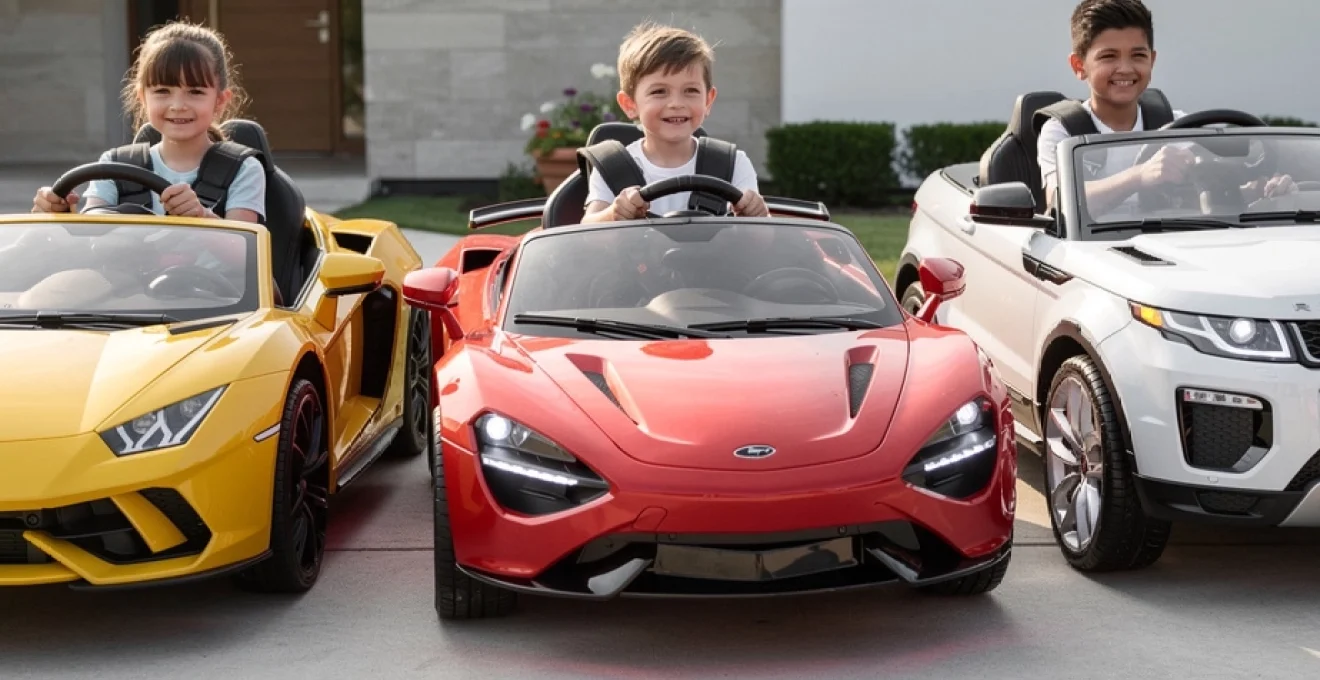
The children’s automotive industry has experienced a remarkable transformation over the past decade, evolving from simple push-along toys to sophisticated miniature vehicles that rival their full-sized counterparts in both design and functionality. Today’s premium kids’ cars represent a fascinating intersection of cutting-edge technology, authentic automotive design, and child development psychology. These aren’t merely toys; they’re carefully engineered products that capture the imagination whilst providing genuine educational value and developmental benefits.
Modern children are growing up in an increasingly digital world, yet their fascination with vehicles remains as strong as ever. From the moment they can walk, youngsters are drawn to anything with wheels, lights, and movement. This natural attraction has driven manufacturers to create increasingly sophisticated ride-on vehicles that satisfy both children’s desires for excitement and parents’ expectations for safety, quality, and educational value. The result is a market segment that continues to grow exponentially, with premium models commanding prices that would have seemed unthinkable just a few years ago.
Advanced safety engineering in modern children’s automotive design
Safety engineering in children’s vehicles has reached unprecedented levels of sophistication, drawing inspiration from full-scale automotive safety protocols whilst adapting them for younger users. Modern ride-on cars incorporate multiple layers of protection that extend far beyond basic construction materials, creating comprehensive safety ecosystems designed to protect children during their driving adventures.
Multi-point harness systems and ISOFIX integration standards
Contemporary premium children’s vehicles feature advanced restraint systems that mirror those found in professional motorsport applications. These multi-point harnesses distribute impact forces across the strongest parts of a child’s body, significantly reducing injury risk during unexpected stops or collisions. The integration of ISOFIX-compatible mounting points allows parents to secure additional safety equipment or adapt the vehicle for children with special needs, demonstrating the industry’s commitment to inclusive design principles.
The harness systems employ quick-release mechanisms that children can operate independently whilst maintaining security during normal use. This balance between safety and autonomy represents a crucial consideration in child development, allowing young drivers to experience independence whilst remaining protected. Manufacturing standards now require these systems to undergo rigorous testing protocols that simulate various impact scenarios, ensuring consistent performance across different usage conditions.
Impact-resistant polypropylene construction and crumple zone technology
The materials revolution in children’s automotive design centres around high-grade polypropylene compounds that offer exceptional impact resistance whilst maintaining lightweight characteristics essential for young users. These advanced polymers undergo specialised treatment processes that enhance their durability and UV resistance, ensuring long-term structural integrity even under intense outdoor usage conditions.
Crumple zone technology, once exclusive to full-scale vehicles, now features prominently in premium children’s cars. These strategically designed weak points absorb impact energy during collisions, redirecting forces away from the passenger compartment. The implementation requires precise engineering calculations to ensure the zones activate appropriately for the lower mass and velocity characteristics typical of children’s vehicle usage patterns.
Electronic speed limitation controllers and parental override mechanisms
Modern speed control systems employ sophisticated electronic governors that provide granular control over vehicle performance characteristics. These systems allow parents to set maximum speeds appropriate for their child’s age and skill level, with some models offering progressive speed increases as children demonstrate improved control and responsibility. The controllers integrate seamlessly with the vehicle’s powertrain, ensuring smooth operation without compromising the driving experience.
Parental override systems represent a significant advancement in child vehicle safety technology. Remote control capabilities allow adults to assume control instantly when necessary, whilst monitoring systems provide real-time feedback on vehicle status and performance. These features address parental concerns about safety whilst maintaining the sense of independence that makes these vehicles so appealing to children.
LED safety lighting arrays and visibility enhancement features
Visibility enhancement technology in children’s vehicles now rivals that found in commercial automotive applications. LED lighting arrays provide exceptional brightness whilst consuming minimal battery power, extending operational time between charges. These systems include front and rear illumination, turn signals, hazard lights, and even underbody accent lighting that improves ground visibility during low-light conditions.
Advanced models incorporate automatic lighting systems that adjust brightness based on ambient conditions, ensuring optimal visibility without overwhelming young drivers. Reflective materials and high-visibility colour schemes complement
reflective decals placed along body lines, helping the coolest cars for kids remain highly visible from every angle. For parents, this combination of active and passive safety measures means outdoor play can continue into the evening with greater peace of mind. For children, the dramatic light signatures add to the sense of driving a “real car”, enhancing immersion without compromising safety.
Premium electric powertrain systems and battery technology
The shift from simple 6V motors to sophisticated 12V and 24V systems has fundamentally changed what kids’ electric cars can do. Today’s premium electric powertrains deliver smoother acceleration, better torque management, and longer run times, making these vehicles feel far closer to scaled-down EVs than toys. This evolution mirrors the wider move towards electrification in the automotive industry, giving children an intuitive introduction to electric vehicles from an early age.
Lithium-ion battery pack configuration and charging infrastructure
Where early ride-on cars relied almost exclusively on sealed lead-acid batteries, the coolest cars for kids now increasingly incorporate lithium-ion battery packs. These packs are lighter, charge faster, and provide more consistent power delivery throughout the drive cycle, so performance does not drop sharply as the battery depletes. Manufacturers configure cells into protected modules, often housed in reinforced compartments with child-proof access to prevent tampering.
Charging infrastructure has evolved in parallel. Many premium models now feature dedicated charging ports that mimic full-size EV connectors, complete with protective covers and indicator LEDs. Some systems integrate smart chargers that automatically switch to trickle mode when the battery reaches full capacity, extending lifespan and reducing the risk of overcharging. For families managing multiple kids’ cars, standardised connectors and clear state-of-charge indicators make day-to-day use far more convenient.
Dual-motor all-wheel drive systems in McLaren P1 ride-on models
At the top end of the market, certain McLaren P1 ride-on models showcase dual-motor all-wheel drive systems that deliver impressive traction for a children’s vehicle. By placing independent motors on the rear and sometimes the front axle, these ride-on supercars can distribute torque more effectively across all four wheels. The result is improved grip on grass, gravel, and gentle inclines, helping maintain stable performance across varied outdoor terrains.
This architecture also allows manufacturers to tune power delivery profiles in software. Parents can select between “eco”, “comfort”, and “sport” modes, each altering acceleration curves and top speeds to align with a child’s age and skill level. In practice, this means the same car can remain engaging for several developmental stages, rather than being outgrown after a single season. From a learning perspective, children begin to grasp the relationship between power, traction, and surface conditions in a very hands-on way.
Regenerative braking technology and energy recovery systems
Borrowed directly from full-scale EVs, regenerative braking in kids’ cars may seem like a novelty, but it serves several valuable purposes. When the child lifts off the accelerator, the motors switch to generator mode, gently slowing the car while feeding energy back into the battery. This helps extend runtime and introduces young drivers to the feel of “one-pedal” driving that is becoming increasingly common in modern electric vehicles.
Regenerative systems also contribute to smoother deceleration compared with abrupt mechanical braking alone. For parents, this means fewer sudden stops that could unseat a younger rider, and reduced wear on physical brake components. For children, the subtle drag they feel when coasting helps them understand momentum, speed control, and distance judgment — fundamental concepts for safe driving later in life, framed through intuitive play.
Smart battery management systems and thermal protection protocols
Behind the scenes, smart battery management systems (BMS) continuously monitor voltage, temperature, and current across each cell group. These systems balance charge levels to prevent individual cells from being overstressed, significantly improving overall longevity. Integrated thermal sensors trigger automatic cutbacks in power output if temperatures exceed safe thresholds, a crucial safeguard when ride-on cars are used outdoors in warmer climates.
Many of the coolest cars for kids now include diagnostic feedback, either via dashboard indicators or companion apps, to alert parents to battery health issues before they become critical. Over-current protection, short-circuit detection, and automatic shutdown protocols are standard in high-end models, ensuring that the electrical system remains stable even if the car encounters unexpected resistance or misuse. In effect, the level of energy management sophistication is closer to that of consumer electronics or e-scooters than traditional toys.
Authentic manufacturer licensing and scale model precision
Another factor that makes the coolest cars for kids so appealing is their remarkable authenticity. Official licensing agreements with major automotive brands — from Mercedes-AMG and Lamborghini to Land Rover — ensure that miniature vehicles replicate real-world models with surprising accuracy. This authenticity does more than satisfy adult car enthusiasts; it helps children build brand recognition and a sense of driving something “genuine”, strengthening the emotional bond with their ride-on cars.
Mercedes-amg GT official design authentication and badging accuracy
Licensed Mercedes-AMG GT ride-on cars undergo rigorous design authentication processes to ensure they respect brand guidelines. From the signature “Panamericana” grille to the precise curvature of the bonnet, each element is carefully scaled down using original CAD data wherever possible. Official AMG and Mercedes-Benz badges are not simply printed approximations; they are three-dimensional emblems produced under license, often using chrome-effect finishes that mirror full-size vehicles.
This attention to detail extends to wheel designs, exhaust styling, and even the proportions of headlamp units. For children, these accurate visual cues reinforce the idea that they are driving a “real” Mercedes-AMG GT, not a generic sports car. For parents, the legitimacy of the branding often reassures them about build quality and safety, as manufacturers must meet brand partners’ standards to maintain licensing rights. The result is a kids’ car that functions both as a toy and as an impressive display piece.
Lamborghini aventador aerodynamic styling and proportional scaling
Few silhouettes are as instantly recognisable to children as the angular, low-slung form of a Lamborghini Aventador. Licensed Aventador ride-on cars work hard to preserve this aerodynamic styling within the constraints of child ergonomics and safety. Designers use proportional scaling techniques to widen the cabin slightly, adjust seat height, and soften certain edges, all while preserving the car’s wedge-like stance and dramatic side intakes.
Functional elements such as scissor-style doors are sometimes reinterpreted with gas struts and soft-close mechanisms suitable for small hands. Aerodynamic details like rear diffusers and spoilers are often moulded from flexible plastic to reduce injury risk without losing visual impact. The net effect is a ride-on supercar that evokes the same emotional response as its full-size counterpart: excitement, speed, and exclusivity. Children quickly recognise the vehicle from games, posters, or YouTube videos, which further enhances its desirability.
Range rover evoque interior cockpit replication and dashboard electronics
While exterior styling draws immediate attention, it is often the interior cockpit replication that keeps children engaged over time. Range Rover Evoque ride-on models, for example, frequently feature dashboards that echo the layout of the adult car: central infotainment-style displays, sculpted door panels, and steering wheels bearing authentic Land Rover logos. Controls are positioned to feel intuitive, with large, tactile buttons replacing complex touch interfaces.
Dashboard electronics go beyond simple on/off switches. Many premium kids’ SUVs now integrate backlit instrument clusters, simulated rev counters, and digital speed indicators calibrated to the vehicle’s limited performance envelope. Some dashboards include preloaded driving sounds, navigation-like voice prompts, or even Bluetooth connectivity for streaming music. In this way, children begin to understand the functional purpose of cockpit elements while still engaging in imaginative play, such as pretending to follow GPS directions or manage vehicle settings.
Interactive digital integration and connectivity features
As children grow up surrounded by smartphones, tablets, and connected devices, it is only natural that the coolest cars for kids integrate interactive digital features. Rather than competing with screens for attention, modern ride-on vehicles embrace connectivity to enhance play value. When done well, this digital layer supports learning, parental supervision, and long-term engagement, instead of distracting from the core driving experience.
One of the most visible trends is the inclusion of multimedia hubs in the centre console. These often combine USB ports, SD card slots, and Bluetooth receivers, allowing you to play audiobooks, music, or language-learning content through built-in speakers. For example, parents might queue up traffic safety songs or simple driving instructions, turning a casual ride around the garden into a subtle learning session. For children, the ability to choose their own soundtrack reinforces a sense of control and personalisation.
Beyond entertainment, some premium kids’ cars connect to companion mobile apps via low-energy Bluetooth. These apps can provide live telemetry such as speed, remaining battery life, and distance travelled, similar to the dashboards found in adult EVs. Parents can adjust performance settings, set virtual geofences, or lock and unlock the vehicle remotely. Have you ever wished you could gently slow your child down without shouting across the driveway? App-based speed limits and “soft stop” commands make that possible with a single tap.
In more advanced ecosystems, ride-on cars integrate with broader smart home setups. For instance, a charging dock may trigger a notification on your phone when the battery is full, or the vehicle might appear as a device within a family management app. This level of integration may sound futuristic, but it mirrors the way connected cars are evolving in the real world, giving children a playful introduction to concepts like remote control, diagnostics, and even over-the-air updates. It’s a bit like giving them a sandbox version of the connected mobility experiences they will encounter as adults.
Importantly, responsible manufacturers build privacy and safety safeguards into these digital systems. Data transmission is typically limited to non-identifiable metrics such as battery status and vehicle mode, and many features only operate when the parent’s device is within a defined range. By treating connectivity as an enhancement rather than a gimmick, designers ensure that digital integration serves the same core goals as the rest of the design: safety, learning, and fun.
Premium materials engineering and weatherproofing technology
Durability is a crucial part of what makes the coolest cars for kids so appealing to both children and parents. These vehicles are expected to withstand enthusiastic driving, changing weather, and frequent transport — often for several years or across multiple siblings. To meet these demands, manufacturers invest heavily in materials engineering and weatherproofing technology that goes far beyond basic plastic shells.
High-density polymers form the backbone of most chassis and body panels, chosen for their balance of flexibility and impact resistance. UV-stabilised pigments help maintain vibrant colours even after prolonged exposure to sunlight, reducing the fading that once made outdoor toys look tired within a single summer. In premium models, exposed fasteners and structural components are often made from coated steel or aluminium alloys, providing corrosion resistance without unnecessary weight. This attention to materials ensures that kids’ electric cars remain visually appealing and structurally sound over many seasons of use.
Weatherproofing extends into the cabin and electrical systems. Sealed wiring looms, grommeted cable entry points, and splash-resistant housings protect sensitive components from dew, light rain, and accidental hose sprays. While these vehicles are not designed for full submersion, the level of ingress protection is comparable to garden equipment or mobility aids, giving families more flexibility in where and when children can play. Have you ever hesitated to let your child drive across damp grass after a shower? Improved sealing standards make that scenario far less risky for the vehicle’s electronics.
Comfort-focused materials also play a role. Seats are frequently padded with closed-cell foam and upholstered in wipe-clean PU leather, offering a more premium feel while remaining practical for outdoor environments. Textured footwells and non-slip pedal surfaces enhance grip, particularly when children are wearing soft-soled shoes or sandals. Some higher-end models even incorporate simple suspension elements — such as spring-loaded rear axles or elastomer bushings — to reduce vibration on uneven terrain, which not only improves comfort but also reduces stress on joints and fasteners.
Ultimately, this combination of robust construction and thoughtful weatherproofing helps premium kids’ cars deliver long-term value. Parents can confidently pass vehicles down to younger siblings or resell them, knowing that key components have been designed to last. From a sustainability perspective, longer product lifecans reduce waste and encourage more mindful consumption. For children, the payoff is simpler: their favourite car is ready to drive whenever inspiration strikes, whether that’s a sunny afternoon in the garden or a cool autumn evening on the driveway.