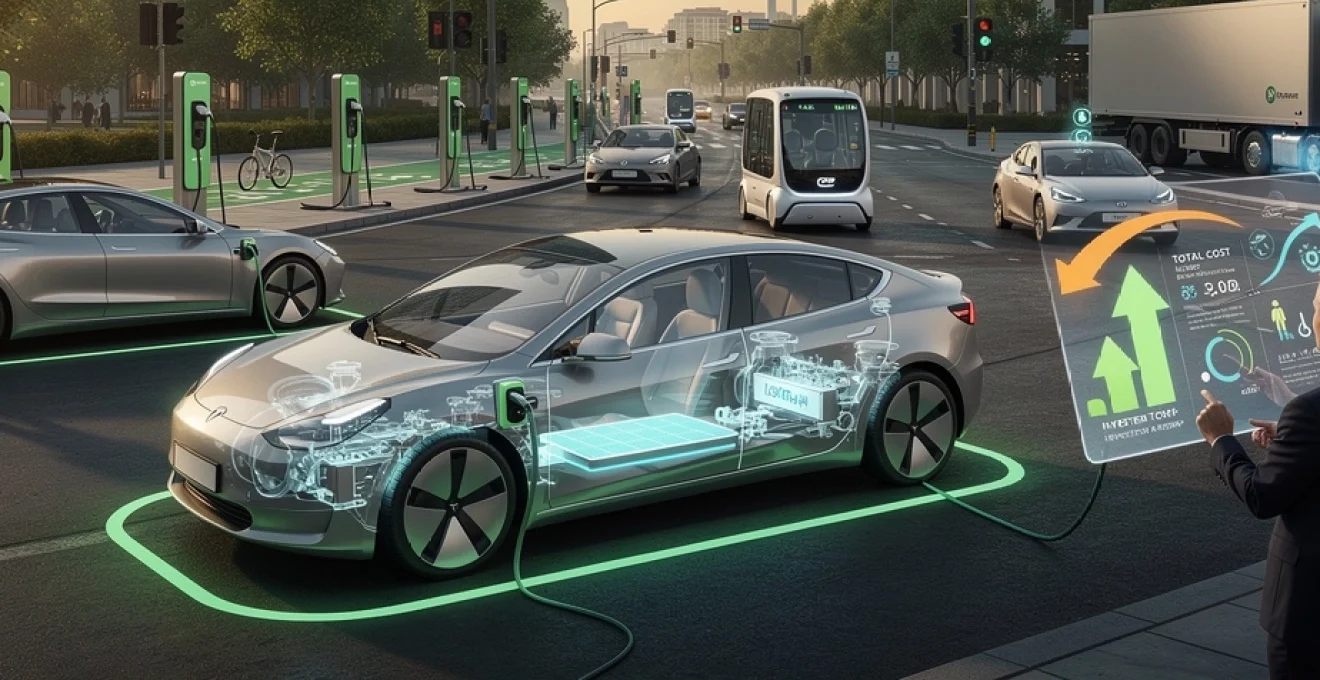
The transportation sector stands at the precipice of an unprecedented transformation, driven by the urgent need to address climate change and evolving consumer preferences. As traditional fossil fuel-powered vehicles face mounting pressure from environmental regulations and shifting market demands, eco-friendly driving technologies are emerging as the definitive solution for sustainable mobility. This revolution encompasses electric vehicles, hybrid systems, alternative fuels, and intelligent transportation networks that promise to reshape how we move through our world.
The momentum behind this transformation is undeniable, with electric vehicle sales surging globally and governments implementing ambitious decarbonisation targets. Industry leaders are investing billions in research and development, whilst breakthrough technologies like solid-state batteries and autonomous systems are accelerating the transition. The convergence of environmental necessity, technological advancement, and economic opportunity is creating a perfect storm that will fundamentally alter the transportation landscape for generations to come.
Electric vehicle technology advancements driving market transformation
The electric vehicle revolution is fundamentally reshaping the automotive industry through groundbreaking technological innovations that address the core limitations of early EV models. Modern electric vehicles now deliver performance capabilities that rival or exceed traditional combustion engines, whilst offering significantly reduced operating costs and environmental impact. The rapid evolution of battery technology, charging infrastructure, and vehicle design has transformed electric mobility from a niche market into a mainstream phenomenon that’s capturing unprecedented consumer interest.
Contemporary EV manufacturing has reached a tipping point where economies of scale are driving down production costs, making electric vehicles increasingly accessible to mainstream consumers. The integration of advanced materials, sophisticated energy management systems, and cutting-edge manufacturing processes has resulted in vehicles that offer superior efficiency, enhanced safety features, and remarkable performance characteristics. This technological convergence is creating compelling value propositions that extend far beyond environmental benefits, encompassing superior driving experiences and long-term economic advantages.
Lithium-ion battery chemistry evolution and energy density improvements
The heart of the electric vehicle revolution lies in the remarkable advances in lithium-ion battery technology, which have fundamentally transformed energy storage capabilities over the past decade. Modern battery cells achieve energy densities exceeding 250 Wh/kg, representing a 300% improvement from early-generation systems. These enhancements stem from sophisticated cathode chemistry innovations, including nickel-rich NCM (nickel-cobalt-manganese) formulations and high-voltage lithium iron phosphate variants that deliver exceptional performance whilst maintaining thermal stability.
Contemporary battery management systems employ artificial intelligence algorithms to optimise charging patterns, extend cell longevity, and predict maintenance requirements with unprecedented accuracy. These intelligent systems continuously monitor thousands of individual cell parameters, adjusting power distribution and thermal management to maximise efficiency and safety. The result is battery packs that maintain over 80% capacity after 200,000 miles of operation, fundamentally altering the economics of electric vehicle ownership and addressing long-standing consumer concerns about battery degradation.
Tesla model S plaid performance benchmarks and range capabilities
Tesla’s Model S Plaid represents a pinnacle of electric vehicle engineering, demonstrating that sustainable transportation can deliver extraordinary performance characteristics that surpass traditional high-performance vehicles. The vehicle achieves 0-60 mph acceleration in under 2.1 seconds whilst maintaining an EPA-estimated range of 396 miles, effectively eliminating range anxiety for the vast majority of driving scenarios. This performance is achieved through innovative tri-motor architecture, advanced battery thermal management, and sophisticated power electronics that optimise energy delivery across varying driving conditions.
The engineering excellence demonstrated by the Model S Plaid extends beyond raw performance metrics to encompass real-world usability and efficiency. The vehicle’s regenerative braking system recovers significant energy during deceleration, whilst predictive algorithms adjust power consumption based on route topology and traffic conditions. These technological innovations showcase how electric vehicles can simultaneously deliver exceptional performance, impressive efficiency, and practical everyday usability, challenging traditional assumptions about the compromises associated with sustainable transportation.
Fast-charging infrastructure development by ionity and electrify america
The expansion of high-power charging networks represents a critical enabler for widespread electric vehicle adoption, addressing the infrastructure limitations that have historically constrained EV market growth. Ionity’s European network and Electrify America’s comprehensive charging infrastructure demonstrate how strategic investment in ultra-fast charging technology can transform the electric vehicle ownership experience. These networks deploy 350
kW chargers along major transport corridors, enabling long-distance travel with charging stops comparable in duration to traditional refuelling. For many drivers, this means eco-friendly driving no longer requires major compromises in convenience or journey planning.
Ionity’s pan-European network focuses on key motorway routes, integrating high-power chargers with smart energy management systems that balance grid loads and increasingly incorporate renewable energy sources. Electrify America, meanwhile, has deployed thousands of DC fast chargers across the United States, often located at retail hubs and near highways to support everyday use cases and long-distance trips alike. As these networks expand, we see the emergence of a cohesive charging ecosystem that supports both private users and commercial fleets, accelerating the broader transition to electric mobility.
Solid-state battery technology from QuantumScape and toyota research
While today’s lithium-ion batteries underpin the current wave of electric vehicles, solid-state battery technology is widely viewed as the next major leap in sustainable mobility. Companies such as QuantumScape and Toyota are investing heavily in solid-state cells that replace liquid electrolytes with solid materials, promising higher energy density, faster charging, and improved safety. Prototype solid-state cells have already demonstrated energy densities above 400 Wh/kg in laboratory conditions, which could realistically translate to 800–1,000 km of real-world range in future EVs.
From a driver’s perspective, solid-state batteries could make eco-friendly driving feel indistinguishable from (or even superior to) traditional motoring, with ultra-fast charging times approaching those of filling a fuel tank. Furthermore, the improved thermal stability and reduced risk of thermal runaway enhance safety and simplify cooling systems, potentially lowering manufacturing costs over time. Although commercial-scale deployment is still expected later in the decade, early pilot production lines and test vehicles indicate that solid-state technology is moving from theory to practice, setting the stage for a second wave of electric mobility adoption.
Hybrid powertrain systems optimising fuel efficiency standards
Hybrid and plug-in hybrid vehicles occupy a crucial space in the journey toward fully electric mobility, helping drivers and fleets reduce emissions without entirely abandoning internal combustion engines. By intelligently combining electric motors with efficient petrol or diesel engines, hybrid powertrains significantly cut fuel consumption and tailpipe emissions, especially in urban driving conditions where stop-start traffic is common. For many users, these vehicles serve as a practical stepping stone to eco-friendly driving while charging networks and battery technologies continue to mature.
Modern hybrid architectures rely on sophisticated control algorithms that constantly analyse driving conditions, battery state-of-charge, and power demand to determine the most efficient energy source at any given moment. This seamless optimisation allows drivers to experience improved fuel economy and reduced emissions without having to change their driving habits. As regulatory pressure on fleet-average CO2 intensifies, hybrid systems are becoming an essential tool for manufacturers seeking to meet tightening efficiency standards across global markets.
Toyota prius prime plug-in hybrid architecture analysis
The Toyota Prius Prime exemplifies how plug-in hybrid technology can bridge the gap between conventional and fully electric vehicles. Its architecture combines a high-efficiency Atkinson-cycle petrol engine with an electric motor and a relatively large battery pack, enabling up to around 40–50 km of pure electric driving in many markets. For daily commutes and urban trips, this electric-only range often covers the majority of use cases, dramatically reducing fuel consumption and emissions.
Under the surface, the Prius Prime’s power control unit orchestrates transitions between electric and hybrid modes with remarkable smoothness. When the battery is depleted or higher power is required, the combustion engine engages to provide additional torque, whilst regenerative braking recaptures kinetic energy during deceleration. This plug-in hybrid architecture allows you to charge at home or at public stations for everyday journeys, yet still enjoy the extended range and refuelling convenience of a conventional car for longer trips, making eco-friendly driving accessible to a broader audience.
Mercedes-benz EQS hybrid regenerative braking systems
Although the Mercedes-Benz EQS is best known as a fully electric luxury sedan, its advanced regenerative braking system offers a valuable reference point for hybrid powertrain optimisation. The EQS employs multiple levels of recuperation, ranging from gentle coasting to strong one-pedal driving, all controlled by predictive algorithms that factor in navigation data, speed limits, and traffic conditions. This intelligent recuperation maximises energy recovery, enhancing overall efficiency and extending range.
Hybrid vehicles increasingly adopt similar regenerative braking concepts, blending mechanical and electrical braking to harvest as much energy as possible without compromising comfort or safety. For drivers, the experience feels intuitive: you simply lift your foot off the accelerator, and the car smoothly slows while topping up the battery. In dense urban environments, where braking events are frequent, these systems can significantly reduce fuel use and emissions, underscoring how software-driven control strategies are just as important as hardware in the evolution of eco-friendly driving.
BMW i3 range extender technology implementation
The BMW i3 with Range Extender (REx) introduced a distinctive approach to resolving range anxiety in early electric vehicles. At its core, the i3 is a battery-electric vehicle, but it incorporates a small petrol-powered generator that activates when the battery reaches a low state of charge. Rather than driving the wheels directly, this compact engine produces electricity to sustain a limited level of charge, effectively extending the vehicle’s usable range for drivers who cannot yet rely on a dense charging network.
From an engineering standpoint, the range extender architecture allowed BMW to prioritise electric driving for the majority of daily trips while providing a safety net for occasional long-distance journeys. This configuration also highlighted an important psychological factor in eco-friendly driving adoption: knowing that a back-up energy source exists makes many drivers more comfortable with transitioning away from purely combustion-based mobility. Although newer EVs with longer ranges have reduced the need for range extenders, the i3 REx remains an instructive example of how innovative hybrid solutions can accelerate market acceptance of sustainable technologies.
Honda clarity PHEV energy management algorithms
The Honda Clarity Plug-in Hybrid showcases sophisticated energy management algorithms designed to maximise electric driving whilst preserving flexibility. Its control system continuously evaluates driving patterns, route profiles, and battery charge to determine the optimal balance between EV mode, hybrid mode, and engine-assisted operation. In EV priority settings, the vehicle actively seeks to use stored electrical energy for as long as possible, switching to hybrid operation only when necessary to maintain performance or range.
For drivers who want to reduce fuel use without overthinking their driving style, these intelligent algorithms handle the complexity behind the scenes. The system can, for example, reserve a portion of battery charge for low-emission zones or urban centres at the end of a journey, mirroring how a seasoned driver might plan energy usage manually. This kind of software-defined efficiency will become increasingly common as plug-in hybrids and other eco-friendly vehicles integrate real-time data, predictive analytics, and even cloud connectivity to fine-tune energy consumption on every trip.
Alternative fuel technologies reshaping transport infrastructure
While electrification dominates headlines, alternative fuel technologies such as hydrogen, advanced biofuels, and synthetic e-fuels are also reshaping the future of sustainable mobility. These solutions can complement battery-electric vehicles, particularly in heavy-duty, long-haul, and specialised applications where high energy density and rapid refuelling are critical. As we diversify the energy mix for transport, infrastructure planning must adapt to support a broader range of refuelling and recharging options.
Hydrogen fuel cell electric vehicles (FCEVs) convert compressed hydrogen into electricity on-board, emitting only water vapour at the tailpipe. For long-distance trucks, buses, and even trains, hydrogen offers refuelling times and ranges comparable to diesel while significantly reducing greenhouse gas emissions when produced from renewable sources. In parallel, sustainable biofuels and e-fuels can be used in existing internal combustion engines with minimal modifications, enabling a faster reduction in lifecycle emissions for the current vehicle fleet. Together, these alternative fuels help close gaps where battery-electric solutions are less practical, creating a more resilient and flexible eco-friendly mobility ecosystem.
Government policy frameworks accelerating green mobility adoption
Policy frameworks play a decisive role in accelerating the adoption of eco-friendly driving technologies by setting clear targets, providing financial incentives, and shaping market expectations. Around the world, governments are introducing stricter emissions standards, phase-out dates for internal combustion engines, and ambitious climate-neutrality goals. For manufacturers, these regulations act as both a constraint and an innovation catalyst, pushing them to rethink vehicle platforms, supply chains, and business models.
For you as a driver or fleet operator, these policies translate into a rapidly expanding range of low- and zero-emission options, often supported by subsidies, tax breaks, and preferential access to low-emission zones. The result is a reinforcing feedback loop: as more eco-friendly vehicles hit the road, supporting infrastructure grows, technology costs fall, and public acceptance increases. The jurisdictions that act earliest and most decisively often become reference markets, demonstrating what is possible and inspiring others to follow.
EU green deal transport decarbonisation targets by 2050
The European Green Deal sets out a comprehensive roadmap for making the EU climate-neutral by 2050, with transport decarbonisation as a central pillar. Road transport, which accounts for almost three-quarters of transport emissions in the bloc, is targeted through measures including stricter CO2 standards for new vehicles, expanded charging and refuelling networks, and support for sustainable fuels. By 2035, the EU has effectively mandated that all new cars and vans sold must be zero-emission, pushing manufacturers to prioritise battery-electric and hydrogen fuel cell technologies.
From an infrastructure standpoint, the Alternative Fuels Infrastructure Regulation (AFIR) requires member states to deploy minimum numbers of fast chargers and hydrogen stations along core transport corridors. This coherent, continent-wide approach aims to ensure that eco-friendly driving is viable whether you are commuting in a city or travelling cross-border by motorway. The EU Green Deal thus acts as a powerful signal to investors, automakers, and consumers that the future of mobility in Europe will be overwhelmingly electric and low-carbon.
UK zero emission vehicle mandate implementation strategy
The UK’s Zero Emission Vehicle (ZEV) mandate is another example of a policy framework designed to accelerate the shift toward eco-friendly driving. Under this system, car manufacturers must ensure that an increasing percentage of their annual sales are zero-emission vehicles, with targets rising each year towards a de facto phase-out of new petrol and diesel cars. Non-compliance attracts financial penalties, creating a strong incentive for automakers to prioritise EV production and marketing.
To support this transition, the UK government is investing in public charging infrastructure, offering grants for home chargers, and adjusting taxation to favour low- and zero-emission vehicles. For fleets, company car tax benefits make electric vehicles particularly attractive from a total cost of ownership perspective. As the ZEV mandate progresses, we can expect the UK market to see a rapid diversification of EV models, more competitive pricing, and innovative ownership models such as subscriptions and car-sharing, all centred around eco-friendly mobility.
California advanced clean cars II regulation compliance
California’s Advanced Clean Cars II (ACC II) regulations extend the state’s long-standing leadership in clean vehicle policy. Building on earlier zero-emission vehicle programmes, ACC II requires that 100% of new passenger vehicle sales in California be zero-emission or plug-in hybrid by 2035, with interim targets ramping up from the mid-2020s. Given California’s market size and influence, these rules often set de facto standards for the broader US automotive industry.
Compliance with ACC II pushes manufacturers to expand their zero-emission line-ups, invest in battery production, and develop more efficient electric powertrains tailored to American driving conditions. The regulation is complemented by investments in charging infrastructure, incentives for low-income households, and programmes to electrify public transport and school buses. As other states adopt similar rules under Section 177 of the Clean Air Act, a growing share of the US market is converging on a future where eco-friendly driving is the norm, not the exception.
Norway electric vehicle incentive programme success metrics
Norway provides one of the most striking real-world demonstrations of how comprehensive incentives can transform a national vehicle fleet. Through a mix of purchase tax exemptions, VAT waivers, reduced tolls, free or discounted parking, and access to bus lanes, Norway has made electric vehicles financially attractive and practically convenient for drivers. As a result, EVs account for over 80% of new car sales, with some months surpassing 90%, far outpacing any other country.
The success metrics speak for themselves: significant reductions in average fleet emissions, high consumer satisfaction, and a robust used EV market that improves affordability for second-hand buyers. Importantly, Norway’s experience shows that once a critical mass of EVs and supporting infrastructure is reached, the market can begin to sustain itself even as some incentives are gradually rolled back. For policymakers elsewhere, the Norwegian model illustrates how bold, consistent policy support can make eco-friendly driving the default choice within a relatively short timeframe.
Autonomous driving integration with sustainable mobility solutions
Autonomous driving technologies are not only about convenience and safety; they also have profound implications for sustainability and eco-friendly driving. Self-driving systems can optimise acceleration, braking, and routing far more precisely than human drivers, reducing energy consumption and emissions. When combined with electric powertrains, autonomous vehicles have the potential to form highly efficient, on-demand mobility services that reduce the need for private car ownership.
Imagine fleets of autonomous electric shuttles and robotaxis circulating through cities, dynamically routed to match real-time demand and traffic conditions. By minimising empty miles and smoothing traffic flows, such systems can significantly reduce congestion and energy use per passenger-kilometre. In logistics, autonomous electric trucks and delivery robots can streamline last-mile distribution, cutting both costs and emissions. Of course, challenges remain around regulation, public acceptance, and cybersecurity, but the convergence of autonomy and electrification could be one of the most powerful levers for reshaping the future of mobility.
Economic impact analysis of eco-friendly transportation markets
The transition toward eco-friendly driving is not just an environmental imperative; it is also reshaping global economic landscapes. From battery manufacturing and charging infrastructure to software development and renewable energy, new value chains are emerging around sustainable mobility. For investors and policymakers, understanding these economic dynamics is critical to capturing opportunities and managing disruptions.
At the same time, traditional segments of the automotive industry face pressure to adapt, as demand for internal combustion engine components declines. This shift raises important questions: where will new jobs be created, how quickly will costs fall, and what role will financial markets play in scaling green mobility solutions? By examining metrics such as total cost of ownership, carbon pricing mechanisms, and ESG-focused investment flows, we can gain a clearer picture of how eco-friendly transportation will influence growth, employment, and competitiveness over the coming decades.
Total cost of ownership comparisons for tesla model 3 vs conventional vehicles
One of the most persuasive arguments for eco-friendly driving is the favourable total cost of ownership (TCO) of modern electric vehicles compared with conventional cars. Take the Tesla Model 3 as an example: while its upfront purchase price may still be higher than that of a similarly sized petrol sedan in some markets, lower running costs quickly close the gap. Electricity is typically cheaper per kilometre than petrol or diesel, and EVs have fewer moving parts, which translates to reduced maintenance expenses over the vehicle’s lifetime.
Studies in Europe and North America consistently show that, over a 5- to 8-year ownership period, the Model 3 can be cheaper to own and operate than mainstream internal combustion models in the same segment, even without generous incentives. When you factor in potential benefits such as lower congestion charges, access to low-emission zones, and higher residual values in markets with strong EV demand, the economic case becomes even stronger. For fleet operators managing large numbers of vehicles, these savings scale dramatically, turning eco-friendly driving from a sustainability gesture into a core business strategy.
Carbon credit trading systems and automotive industry participation
Carbon credit and emissions trading systems are increasingly influencing how automakers design and price their vehicles. In jurisdictions with cap-and-trade schemes or fleet-average CO2 regulations, manufacturers that exceed their emissions targets may need to purchase credits from competitors that outperform theirs. This dynamic has led to high-profile deals where companies with strong EV portfolios sell emissions credits to those still reliant on combustion-heavy line-ups.
For eco-friendly driving, this creates a powerful financial incentive: every zero-emission vehicle sold not only helps reduce tailpipe emissions but can also generate valuable regulatory credits. Some automakers explicitly factor potential credit revenues into their EV strategies, effectively using policy frameworks to subsidise accelerated investment in green technologies. Over time, as more companies expand their electric offerings and overall fleet emissions fall, we can expect the carbon credit market to evolve, but for now it remains a key lever in aligning corporate behaviour with climate objectives.
Investment flows in clean transportation from BlackRock and vanguard ESG funds
Global asset managers such as BlackRock and Vanguard are directing substantial capital towards companies and projects that support clean transportation, often through dedicated ESG (Environmental, Social, and Governance) funds. These investment vehicles prioritise firms with credible decarbonisation strategies, strong governance practices, and exposure to growth sectors like electric vehicles, charging infrastructure, and renewable energy. For the mobility industry, this influx of capital helps finance factory expansions, research and development, and large-scale infrastructure deployments.
As institutional investors increasingly integrate climate risk into their decision-making, companies that lag on eco-friendly driving strategies may face higher capital costs or reduced access to funding. Conversely, those that lead in EV adoption, battery innovation, and circular economy practices often benefit from favourable valuations and greater investor confidence. In this way, financial markets are reinforcing the transition toward sustainable mobility, making it not just a technological race but also a contest for capital and long-term resilience.
Job creation patterns in electric vehicle manufacturing sectors
The shift to eco-friendly driving is transforming labour markets across the automotive value chain. While there are legitimate concerns about job losses in traditional engine and exhaust system manufacturing, the rapid growth of EV production, battery gigafactories, and charging infrastructure projects is creating new employment opportunities. According to various industry analyses, clean transportation sectors can generate more jobs per unit of investment than fossil fuel-based industries, particularly when local supply chains are developed for battery materials, power electronics, and software.
New roles are emerging in fields such as battery engineering, powertrain software development, high-voltage maintenance, and grid integration, requiring upskilling and reskilling of the existing workforce. Governments and companies that invest early in training programmes, apprenticeships, and STEM education will be better positioned to capture these opportunities and mitigate disruption. Ultimately, eco-friendly driving is not just about cleaner air and quieter streets; it is also about building a more innovative, resilient economy that supports high-quality jobs in the industries of the future.