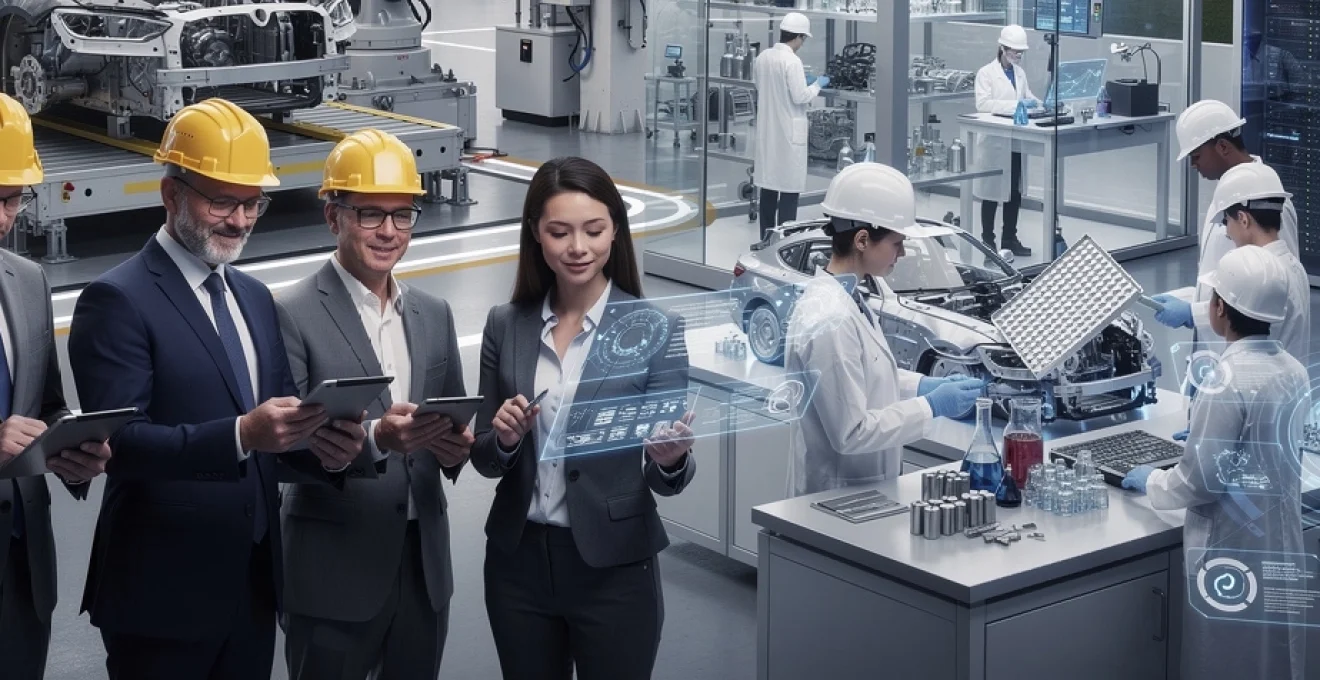
Despite mounting challenges from emerging markets and shifting consumer preferences, German manufacturing excellence remains a benchmark for global industries. The nation’s commitment to precision engineering, substantial research investments, and systematic approach to innovation continues to drive technological advancement across multiple sectors. From automotive giants like BMW and Mercedes-Benz to industrial powerhouses such as Siemens and BASF, German brands consistently demonstrate their ability to adapt while maintaining their reputation for superior quality and cutting-edge solutions.
The resilience of German industry stems from deeply embedded cultural values that prioritise long-term thinking over short-term gains. This approach has enabled German companies to weather economic uncertainties whilst continuing to invest heavily in future technologies. As global competition intensifies, particularly from Chinese manufacturers and American tech giants, German brands are leveraging their traditional strengths whilst embracing digital transformation to maintain their competitive edge.
Engineering excellence through precision manufacturing and quality control systems
German manufacturing philosophy revolves around the principle of Gründlichkeit – thoroughness in every aspect of production. This cultural commitment to precision has created manufacturing processes that consistently deliver products exceeding international quality standards. The integration of advanced quality control systems throughout the production cycle ensures that defects are identified and eliminated before they can impact the final product.
Modern German factories employ sophisticated statistical process control methods that monitor thousands of variables simultaneously. These systems utilise real-time data analytics to predict potential quality issues before they occur, enabling proactive adjustments that maintain consistency. The result is manufacturing precision that has become synonymous with the “Made in Germany” label, commanding premium prices in global markets.
Six sigma implementation in BMW’s munich production facilities
BMW’s Munich production facility exemplifies the application of Six Sigma methodologies in automotive manufacturing. The company has achieved defect rates of less than 3.4 parts per million through rigorous statistical analysis and continuous process improvement. This level of precision requires extensive employee training and a culture that embraces data-driven decision making at every level of the organisation.
The implementation involves comprehensive measurement systems that track quality metrics across all production stages. From initial material inspection to final assembly verification, every component undergoes multiple quality checks using automated inspection systems and human expertise. This dual approach ensures that both measurable defects and subjective quality aspects are addressed effectively.
Mercedes-benz advanced materials research at sindelfingen plant
The Sindelfingen facility serves as Mercedes-Benz’s primary research centre for advanced materials development, focusing on lightweight construction and sustainable manufacturing processes. The plant’s materials laboratory conducts extensive testing on carbon fibre composites, advanced aluminium alloys, and innovative steel formulations that reduce vehicle weight whilst enhancing safety performance.
Research teams collaborate with universities and specialised suppliers to develop next-generation materials that meet increasingly stringent environmental regulations. The facility’s pilot production lines allow for rapid prototyping and testing of new materials before full-scale implementation, reducing development time and minimising production risks.
Audi’s lightweight construction technologies in aluminium space frame development
Audi’s Aluminium Space Frame (ASF) technology represents a significant breakthrough in automotive lightweight construction, reducing vehicle weight by up to 40% compared to traditional steel constructions. The development process involves sophisticated computer modelling and extensive crash testing to ensure that weight reduction does not compromise safety performance.
The manufacturing process utilises precision joining techniques including laser welding, adhesive bonding, and mechanical fastening systems. Each method is optimised for specific structural requirements, creating joints that are stronger than traditional welding whilst maintaining the flexibility needed for crash energy absorption. This technological innovation has influenced lightweight construction approaches across the entire automotive industry.
Porsche’s Motorsport-Derived manufacturing processes for consumer vehicles
Porsche’s unique approach involves transferring manufacturing techniques developed for racing applications directly into consumer vehicle production. The company’s experience in Formula 1 and endurance racing provides insights into extreme performance requirements that inform everyday vehicle development processes.
Manufacturing processes developed for race cars, such as precision machining tolerances and specialised assembly techniques, are adapted for mass production whilst maintaining the performance characteristics that define the Porsche brand. This technology transfer ensures that consumer vehicles benefit from innovations originally designed for the most demanding motorsport applications.
Research and development investment strategies driving technological
Research and development investment strategies driving technological advancement
German brands understand that engineering excellence alone is not enough to sustain leadership in performance and innovation. Long-term competitiveness depends on systematic, large-scale investment in research and development (R&D), with clear strategic priorities and measurable outcomes. Germany consistently invests more than 3% of its GDP in R&D, and a significant share of this comes from industrial giants in the automotive, chemicals, and technology sectors.
Unlike many competitors who prioritise short-term returns, German companies typically structure their R&D portfolios over 5–10 year horizons. This allows them to fund both incremental improvements to existing platforms and more radical, exploratory projects in areas such as electrification, autonomous driving, and industrial digitalisation. The result is a steady pipeline of innovations that feed into new product generations, manufacturing upgrades, and entirely new business models.
Volkswagen group’s €15.6 billion annual R&D budget allocation analysis
Volkswagen Group is one of the world’s largest corporate investors in research and development, spending around €15–16 billion annually in recent years. This level of R&D intensity places it on par with leading U.S. and Asian technology firms, underlining how central innovation is to its long-term strategy. A substantial portion of this budget is directed towards electric vehicle architectures, battery technology, and software platforms for connected cars.
Rather than dispersing funds evenly across brands, Volkswagen uses a centralised platform strategy. Core technologies such as the MEB and SSP electric platforms, unified battery cells, and operating systems are developed at group level and then adapted by brands like Audi, Škoda, and Volkswagen Passenger Cars. This allows the group to leverage economies of scale while still differentiating driving characteristics and brand identities.
At the same time, the company allocates dedicated budgets to regional innovation hubs in China, North America, and Europe. These centres adapt global technologies to local market requirements and regulations, for example tuning driver assistance systems to different road infrastructures. For suppliers and partners, understanding how this €15.6 billion is channelled into platforms, software, and regional adaptation is crucial for aligning their own innovation roadmaps with Volkswagen’s trajectory.
Bosch’s patent portfolio leadership in automotive electronics and IoT
Bosch exemplifies how a German industrial company can lead in both traditional engineering and cutting-edge digital technologies. The company files thousands of patents each year, consistently ranking among Europe’s top patent applicants, particularly in automotive electronics, sensors, and Internet of Things (IoT) solutions. This patent leadership is not only a matter of prestige; it underpins Bosch’s role as a technology partner for almost every major car manufacturer worldwide.
In the automotive domain, Bosch has been pivotal in areas such as advanced driver assistance systems (ADAS), power electronics for electric vehicles, and vehicle connectivity platforms. Its radar and camera systems are embedded in many premium and volume models, often unnoticed by end customers yet critical for safety and automated driving functions. In parallel, Bosch IoT Suite connects millions of devices and industrial assets, turning traditional components into smart, networked systems.
For companies working with Bosch, the breadth of this patent portfolio translates into access to proven building blocks for innovation. Instead of developing every sensor, control unit, or cloud interface from scratch, manufacturers can integrate Bosch’s modules and focus their own efforts on differentiation, user experience, and service design. This collaborative innovation model accelerates time-to-market whilst maintaining the high reliability associated with German engineering.
Sap’s cloud computing infrastructure innovations for enterprise solutions
While automotive and industrial hardware often dominate the conversation, software giants such as SAP play a central role in why German brands continue to lead in performance and innovation. SAP’s evolution from on-premise enterprise resource planning (ERP) systems to cloud-based platforms illustrates how German companies are reshaping their own technological foundations. Solutions like SAP S/4HANA and SAP Business Technology Platform provide real-time data processing, advanced analytics, and seamless integration across global operations.
For manufacturers, this shift to cloud computing is more than a technical upgrade; it enables entirely new ways of running plants, supply chains, and R&D projects. Production data from multiple factories can be aggregated and analysed in real time, allowing managers to identify quality deviations, energy inefficiencies, or supply bottlenecks before they escalate. In an environment where energy prices and geopolitical risks can change quickly, this level of transparency is becoming indispensable.
At the same time, SAP’s open interfaces allow companies to integrate AI tools, predictive maintenance algorithms, and digital twin applications from specialised partners. This ecosystem approach mirrors what you see in consumer app platforms: a robust core system surrounded by innovative, niche extensions. For German brands, this provides the flexibility to experiment with new digital services while retaining the stability and compliance required by regulators and investors.
Basf’s chemical process engineering breakthroughs in sustainable materials
BASF, the world’s largest chemical company, showcases how German process engineering can drive sustainability and performance simultaneously. The company invests billions each year in R&D, with a growing share dedicated to climate-neutral processes, recyclable materials, and high-performance polymers for automotive and industrial applications. These innovations directly support German carmakers in meeting CO2 targets and enhancing vehicle efficiency.
One prominent example is BASF’s work on battery materials for electric vehicles. By developing more energy-dense cathode materials and optimised electrolyte formulations, BASF helps manufacturers extend driving range and reduce charging times. At the same time, the company is investing in closed-loop recycling for batteries and plastics, turning end-of-life products back into valuable raw materials.
BASF’s integrated “Verbund” production sites, where multiple plants are interconnected to reuse heat and by-products, serve as large-scale laboratories for sustainable chemical process engineering. For automotive and industrial customers, partnering with a company that can deliver both performance-enhancing and climate-friendly materials is a strategic advantage. It means that innovation in German brands is increasingly aligned with broader ESG and regulatory expectations, not just technical performance metrics.
Industry 4.0 integration and digital transformation methodologies
Industry 4.0 has become a global buzzword, but in Germany it is a practical framework guiding how factories, supply chains, and products are redesigned. German brands were early adopters of cyber-physical systems, machine-to-machine communication, and advanced automation. The focus has gradually shifted from isolated pilot projects to fully integrated digital value chains, where design, production, and service are connected through shared data platforms.
In many German plants, production equipment is equipped with sensors that monitor vibration, temperature, and utilisation in real time. This data feeds into predictive maintenance models, reducing unplanned downtime and extending asset life. You can think of it like regular health check-ups for machines: instead of waiting for a breakdown, the system spots early warning signs and schedules interventions at convenient times.
A crucial aspect of German digital transformation is the emphasis on interoperability and standards. Initiatives such as Plattform Industrie 4.0 bring together companies, universities, and policymakers to define common architectures and communication protocols. This collaborative approach reduces the risk of vendor lock-in and ensures that devices from different suppliers can work together. For manufacturers, it becomes easier to scale successful digital use cases across multiple sites and partners.
Another defining feature is the human-centric design of digital workplaces. Rather than seeking full automation at any cost, many German companies aim for “automation with a human in the loop”. Digital assistants, augmented reality instructions, and collaborative robots support workers in complex tasks instead of replacing them outright. This reflects both cultural preferences and the realities of a skilled labour market where retaining expertise is critical for innovation.
Mittelstand companies’ specialisation model and market dominance strategies
Beyond famous multinationals, Germany’s global competitiveness rests heavily on its Mittelstand – thousands of small and medium-sized enterprises that dominate niche markets worldwide. These often family-owned companies specialise in highly specific products: a particular type of precision sensor, a unique forming machine, or a tailored chemical additive. Because they concentrate on narrow domains, they can reach extraordinary depths of expertise and command leading market shares.
This specialisation model has several strategic advantages for performance and innovation. First, it fosters close, long-term relationships with customers who rely on these companies for mission-critical components. Feedback from these relationships flows directly into product improvements and new developments, creating a continuous loop between user needs and engineering solutions. Second, the Mittelstand’s long-term ownership structures encourage reinvestment of profits into R&D and workforce training rather than short-term dividend maximisation.
Many of these firms operate as “hidden champions”: they are little known to the public but hold 50% or more of global market share in their segments. Their success strategies often combine high product customisation with global reach. For example, a medium-sized machine tool manufacturer may adapt its equipment to local standards and practices in China or the U.S., while still leveraging the same engineering core. This balance between standardisation and customisation is one reason German industrial products are perceived as both highly reliable and finely tuned to customer needs.
Digitalisation is now changing how Mittelstand firms defend and expand their positions. Some are building digital service layers around their hardware, such as remote monitoring, performance dashboards, or pay-per-use business models. Others collaborate with universities and startups to integrate AI and data analytics into their offerings. The companies that succeed in this transition will likely remain critical innovation engines within Germany’s industrial ecosystem.
Technical education ecosystem and dual apprenticeship programme impact
A key reason German brands can sustain high performance and continuous innovation lies in the country’s technical education ecosystem, particularly the dual apprenticeship system. Instead of separating academic learning from workplace practice, this model combines classroom instruction at vocational schools with on-the-job training in companies. Apprentices typically spend several days a week in the workplace and the rest in formal education, earning recognised qualifications while building real-world skills.
For manufacturers, this system ensures a steady pipeline of technicians, mechatronics specialists, and process engineers who understand both theory and practice. New hires are familiar with actual production equipment, quality standards, and safety procedures from day one. This reduces ramp-up time and supports the adoption of complex technologies such as robotics, CNC machining, or advanced measurement systems.
The dual system also supports career-long learning. Many apprentices later pursue advanced technical degrees or specialised certifications, often with financial support from their employers. This creates a culture where continuous upskilling is normal rather than exceptional. As German factories integrate Industry 4.0 solutions, workers are trained to interpret sensor data, adjust automated systems, and collaborate with digital tools rather than merely execute repetitive tasks.
From a strategic perspective, the technical education ecosystem helps Germany bridge the gap between high-level research and shop-floor implementation. Innovations emerging from universities, Fraunhofer institutes, or corporate R&D centres can be translated into practice more quickly when there is a workforce capable of understanding and operating new technologies. For international observers wondering how Germany maintains such high quality standards, the answer often starts in the classroom and the apprenticeship workshop.
Regulatory framework advantages and standards development leadership
Finally, Germany’s regulatory environment and leadership in standard-setting play a significant role in sustaining its brands’ global influence. At first glance, strict regulations on safety, emissions, and data protection might seem like a burden. Yet, for many German companies, these demanding frameworks act as catalysts for innovation. When you design products to meet some of the world’s toughest standards, you often end up ahead of competitors in less regulated markets.
German organisations are deeply involved in international bodies such as ISO, IEC, and UNECE, as well as European standardisation initiatives. This engagement allows them not only to comply with emerging norms but to shape them. For example, German contributions have been central in defining functional safety standards for automotive electronics and protocols for machine interoperability in Industry 4.0 environments. By helping write the rulebook, German brands ensure that global standards reflect their strengths in precision, reliability, and systems integration.
The regulatory framework also reinforces trust among consumers and investors. Robust corporate governance requirements, transparent reporting on risk and sustainability, and strong worker representation create a stable environment for long-term industrial strategies. While recent assessments highlight gaps in investor transparency and risk disclosure for some companies, the overall direction is towards greater openness – a trend that aligns with global expectations for ESG performance.
For companies operating within this environment, the challenge is to turn compliance into competitive advantage. Those that proactively integrate upcoming regulations into their innovation plans can launch products and services that are “future proof” in multiple markets. In practice, this means that when new emissions limits, safety rules, or data protection requirements come into force, German brands are often ready ahead of time. That readiness, backed by decades of engineering culture, is a key reason why German brands continue to lead in performance and innovation, even as the global industrial landscape undergoes rapid transformation.