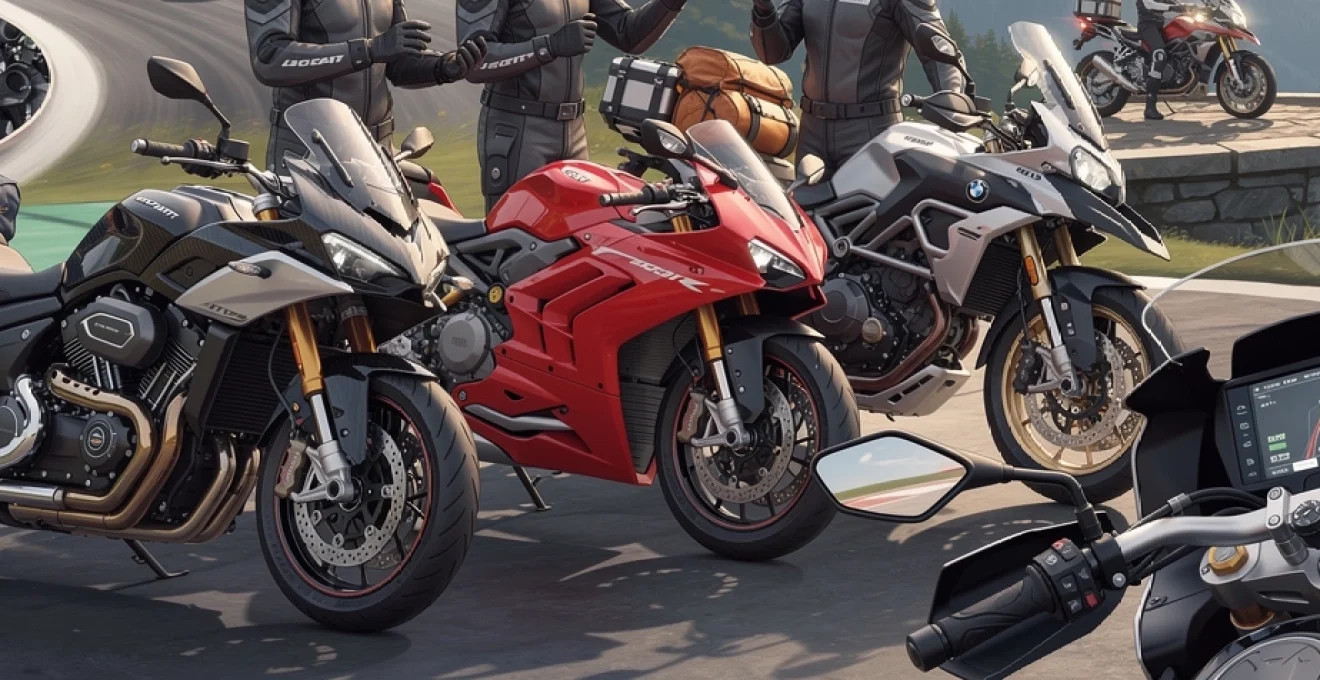
The enduring fascination with motorcycles transcends mere transportation needs, evolving into a cultural phenomenon that captivates millions worldwide. From the roar of a Harley-Davidson engine reverberating through quiet streets to the precision engineering of modern superbikes carving through mountain passes, motorcycling represents something far more profound than simple mobility. This passion has sustained consistent market growth for over a decade, with manufacturers reporting increased sales figures year after year.
The motorcycle industry’s resilience stems from its unique ability to fulfil multiple human desires simultaneously. Whether seeking the pure adrenaline rush of high-performance riding, the meditative quality of long-distance touring, or the strong community bonds forged through shared experiences, motorcycling offers something genuinely distinctive. Modern riders aren’t merely purchasing vehicles; they’re investing in lifestyle choices that promise freedom, adventure, and authentic self-expression in an increasingly digital world.
Engineering excellence and performance culture in modern motorcycling
Contemporary motorcycle engineering represents the pinnacle of mechanical innovation, where decades of racing heritage merge with cutting-edge technology to create machines that consistently push performance boundaries. The symbiotic relationship between manufacturers and motorsport competitions has accelerated technological advancement at an unprecedented pace, with innovations from MotoGP and World Superbike championships finding their way into production motorcycles within remarkably short timeframes.
Advanced engine technologies in contemporary superbikes
Modern motorcycle engines showcase engineering sophistication that rivals Formula 1 powerplants, packed into considerably smaller packages. Variable valve timing systems, once exclusive to high-end automotive applications, now feature prominently in mainstream motorcycles, optimising power delivery across different rpm ranges. These systems allow engines to deliver smooth, tractable power for everyday riding whilst maintaining explosive performance when demanded.
The integration of advanced materials has revolutionised engine construction, with manufacturers employing titanium connecting rods, ceramic-coated pistons, and diamond-like carbon coatings to reduce friction and enhance durability. These innovations enable modern superbikes to produce over 200 horsepower from engines displacing barely one litre, whilst maintaining reliability standards that would have been impossible just two decades ago. Power-to-weight ratios now regularly exceed 300 horsepower per tonne, placing motorcycles in performance territory previously reserved for purpose-built race cars.
Aerodynamic innovations from MotoGP to street applications
Aerodynamic development in motorcycling has reached extraordinary levels of sophistication, with computational fluid dynamics and wind tunnel testing informing every surface contour on modern sport bikes. The trickle-down effect from MotoGP has introduced features like winglets, sculpted fairings, and carefully designed air ducts that actively manage airflow to reduce drag whilst increasing stability at high speeds.
These aerodynamic enhancements serve multiple purposes beyond pure performance gains. Improved airflow management reduces rider fatigue by minimising buffeting, whilst strategic air channelling keeps engines running at optimal temperatures even during aggressive riding. The visual impact of these aerodynamic solutions has also become integral to motorcycle design language, creating the distinctive appearance that enthusiasts immediately recognise and admire.
Electronic rider assistance systems and their Real-World impact
Electronic rider aids have transformed motorcycle safety and performance accessibility, democratising advanced riding techniques previously available only to professional racers. Traction control systems continuously monitor wheel slip and adjust power delivery thousands of times per second, allowing riders to maintain control in challenging conditions that would have been impossible to navigate safely using purely mechanical systems.
Anti-lock braking systems have evolved far beyond simple wheel lock prevention, now incorporating corner-sensitive algorithms that adjust braking force based on lean angle and surface conditions. These systems work seamlessly with advanced suspension electronics that automatically adjust damping characteristics based on riding style and road conditions. The result is motorcycles that enhance rider capability whilst providing multiple layers of safety intervention, making high-performance motorcycling accessible to a broader range of enthusiasts.
Material science breakthroughs in motorcycle construction
Advanced materials have fundamentally altered motorcycle construction, enabling manufacturers to achieve previously impossible combinations of strength, lightness, and durability. Carbon fibre components, once prohibitively expensive, now appear throughout mainstream motorcycle production, reducing weight whilst maintaining structural integrity. These weight savings translate directly
into improved acceleration, sharper handling, and more predictable behaviour at the limit. High-strength aluminium alloys dominate frame and swingarm construction, while selective use of magnesium in wheels and engine covers trims unsprung and rotating mass. At the very top end, manufacturers are increasingly experimenting with 3D-printed titanium components, which allow intricate shapes that were previously impossible to machine, optimising strength only where it is needed and shaving grams everywhere else.
Crucially, these material science breakthroughs filter down into everyday motorcycles, not just halo superbikes. Mid-range adventure models now feature composite subframes, lighter wheels, and reinforced plastics that shrug off the rigours of commuting and touring. The cumulative effect is significant: a typical 1000cc motorcycle of 2024 can weigh 15–20% less than its equivalent from the early 2000s, yet offer far greater performance and safety. For riders, that translates into bikes that are easier to manoeuvre at low speeds, more agile on twisty back roads, and less fatiguing on long journeys.
Psychological drivers behind motorcycle enthusiasm and community formation
While engineering excellence explains part of motorcycling’s appeal, the motorbike lifestyle is ultimately sustained by powerful psychological drivers. Motorcycles engage our senses, challenge our skills, and tap into deep-seated human needs for belonging, identity, and autonomy. Understanding why riders are drawn to two wheels helps explain why the motorcycle community remains so resilient, even as mobility norms shift and urbanisation accelerates.
From the outside, it can be tempting to reduce motorbike enthusiasm to simple thrill-seeking behaviour. Yet when we listen to riders themselves, a more complex picture emerges. Many cite stress relief, mental clarity, and a sense of purpose that extends far beyond mere speed. The same machine that can deliver an adrenaline-charged track day can also provide a quiet sunrise ride that feels almost meditative. This psychological versatility is one of the reasons why the motorcycle lifestyle attracts such a diverse mix of enthusiasts.
Risk-taking behaviour and thrill-seeking psychology in motorcycling
Risk is undeniably part of the motorcycling equation, but it is often misunderstood. Psychologists describe a subset of people as having higher sensation-seeking traits: they actively look for experiences that are intense, novel, and challenging. For these individuals, the calculated risk of riding a motorcycle is not about recklessness; it is about engaging their cognitive and physical skills in a focused way. Much like rock climbing or skiing, motorcycling offers a structured environment where risk can be managed through training, equipment, and experience.
Riders often talk about entering a “flow state” when they are navigating a series of corners or tackling a technical road. In this state, concentration is total, distractions fall away, and time seems to slow down. It is similar to an athlete’s zone, where physical actions and mental decisions feel perfectly synchronised. That combination of moderate, controlled risk and deep concentration releases powerful neurochemical rewards, including dopamine and endorphins, which reinforce the desire to ride again. It is not the danger itself that attracts enthusiasts, but the sense of mastery over it.
Brotherhood culture and tribal identity formation
Walk into any biker café or meet-up spot and you will notice the subtle signals of tribe: club patches, brand logos, helmet stickers, and worn-in leathers that tell stories of past journeys. The motorbike lifestyle naturally fosters a sense of brotherhood (and increasingly, sisterhood) that fills a social need many people struggle to satisfy in fragmented modern societies. Group rides, charity events, and informal weekend meet-ups create rituals that bind people together in a way that is both simple and profound.
This tribal identity formation is not accidental; it is a core part of why motorcycle culture endures. When you ride, you become part of an informal fraternity that often transcends age, profession, and background. A surgeon and a builder can share the same roadside chat about tyres and touring routes. For newcomers, this community dimension can be the final push from casual interest to committed lifestyle. We are social creatures, and owning a motorcycle becomes not only a personal statement but a membership badge in a global tribe.
Freedom psychology and escapism through two-wheeled transport
Few words appear more often in motorcycle marketing than “freedom”, but there is genuine psychology behind the slogan. Modern life is highly structured and scheduled; calendars and screens dictate how we move through each day. Motorcycling offers a powerful counterweight: you turn the key, pick a direction, and in minutes you can be on an open road with minimal barriers between you and the landscape. The feeling of direct exposure to the elements – the wind, temperature shifts, and changing scents – reinforces the sense that you have stepped outside routine.
For many riders, the bike becomes an intentional tool for escapism and mental reset. Short rides after work can punctuate a stressful day, while weekend trips create mini-adventures that break up the monotony of the working week. Unlike some forms of escapism that encourage passivity, riding demands active engagement. You cannot doomscroll on a motorcycle; your hands, eyes, and mind are fully occupied. That enforced disconnection from digital noise often leaves riders returning home feeling more grounded, not less.
Status symbolism in premium motorcycle ownership
Although motorcycles can be very practical, they also carry strong symbolic value. Premium machines – whether a hand-built custom, a high-end Italian superbike, or a flagship adventure tourer – function as rolling expressions of personal taste, values, and status. In some markets, particularly in Asia, large-capacity motorcycles are still rare enough to serve as clear indicators of financial success and lifestyle aspiration, much like luxury watches or sports cars.
Yet motorcycle status symbolism is more nuanced than simple price tags. Within the enthusiast world, respect often comes as much from how a bike is used as from what it costs. A well-travelled, battle-scarred adventure machine can command more admiration than a showroom-fresh performance model that never leaves the city. The choice of brand, model, and customisation style helps riders signal which “sub-tribe” they belong to, whether that is classic café racers, track-day regulars, long-distance tourers, or off-road explorers. In that sense, owning a motorcycle is as much about signalling identity to oneself as it is about projecting an image to others.
Economic factors sustaining global motorcycle market growth
The continued attraction of the motorbike lifestyle is not only cultural and psychological; it is also underpinned by solid economics. Globally, the motorcycle market has enjoyed over a decade of steady growth, with some regions experiencing double-digit annual increases. Emerging markets in Asia, Africa, and Latin America rely heavily on motorcycles as primary transport, while mature markets in Europe and North America see consistent demand for leisure and commuter bikes alike.
Rising urban congestion and increasing fuel costs are key drivers. In many cities, motorcycles and scooters offer significantly lower running costs than cars, both in fuel consumption and maintenance. Insurance premiums can also be lower, particularly for smaller-capacity models. Even when riders invest in more expensive machines, total cost of ownership over several years often compares favourably to that of a second car. For younger generations priced out of traditional car ownership, a motorcycle can be a more attainable route into personal mobility and lifestyle expression.
Manufacturers and dealers have further fuelled demand with flexible finance products, seasonal promotions, and bundled accessory packages. Subscription-style services and short-term leasing options are beginning to appear in some markets, lowering the barrier to entry for curious new riders. Meanwhile, the used motorcycle market provides a healthy secondary channel, making it easier for first-time buyers to experiment with different segments – commuter, naked, adventure, or cruiser – without overcommitting financially. The result is an ecosystem where entry-level affordability and aspirational high-end products coexist, keeping the pipeline of enthusiasts constantly replenished.
Cultural impact of iconic motorcycle brands and models
Certain motorcycle brands have transcended their industrial origins to become powerful cultural symbols. They appear in films, music videos, and fashion editorials; they influence design in unrelated industries; they even shape how non-riders imagine the motorbike lifestyle. These iconic manufacturers do more than sell machines – they curate entire narratives around freedom, rebellion, precision, or exploration. As long as these stories resonate, they help pull new generations toward two wheels.
Iconic models act as focal points for these narratives. The sight of a Harley-Davidson cruiser, a Ducati superbike, a BMW GS, or a classic Japanese inline-four can instantly conjure associations in the mind of even a casual observer. These mental shortcuts are the result of decades of brand-building, racing success, and cultural placement. In a world where attention is scarce, the ability of a motorcycle’s silhouette alone to communicate a lifestyle is a powerful commercial and cultural asset.
Harley-davidson’s cultural legacy and brand evangelism
Harley-Davidson is perhaps the most recognisable motorcycle brand on the planet, and its cultural legacy is inseparable from the broader story of the motorbike lifestyle. For over a century, Harley has cultivated an image rooted in Americana, individualism, and long-distance cruising. Films from the 1950s onward – culminating in touchstone works like “Easy Rider” – cemented the Harley as an emblem of rebellion and counterculture, even as the brand itself became a mainstream global player.
What sets Harley-Davidson apart is the sheer intensity of its brand evangelism. Owners often identify as “Harley riders” before they describe themselves as motorcyclists in general. The company has nurtured this identity through official owners’ groups, branded events, and a vast ecosystem of licensed apparel and accessories. For many, buying a Harley is not simply a purchase; it is an initiation into a shared mythology. Whether you ride one or not, the archetype of the leather-clad cruiser rider on an endless desert highway continues to shape how the wider public imagines motorcycle freedom.
Ducati’s italian heritage and racing pedigree influence
If Harley-Davidson embodies the open American highway, Ducati represents European passion and racing precision. Built around a strong presence in World Superbike and MotoGP, Ducati’s brand identity fuses performance with unmistakable Italian design flair. Desmodromic valve systems, trellis frames, and now advanced electronics have all become part of the company’s technical signature, while the distinctive red livery is instantly recognisable on both road and track.
Ducati’s racing pedigree has a direct impact on enthusiast culture. Many riders first encounter the brand by watching MotoGP, then later seek to own a machine that carries the same DNA as the race bikes they follow on television. Owning a Ducati often feels like joining a niche art-and-engineering club, where form and function are given equal weight. Café meet-ups, track days, and brand-led events reinforce the sense that Ducati is not just selling motorcycles but a high-performance lifestyle steeped in Italian heritage and competitive success.
BMW GS adventure series and overlanding culture
In the adventure and overlanding space, few names carry as much weight as the BMW GS series. Since the launch of the original R80G/S in the 1980s, BMW’s big adventure twins have come to symbolise long-distance, go-anywhere capability. The image of a fully loaded GS crossing continents, splashed across travel blogs and social media feeds, has done more than any marketing campaign to popularise the idea of motorcycle overlanding as a modern rite of passage.
The GS series has had a profound cultural impact beyond its sales figures. It helped define the “adventure bike” category that almost every major manufacturer now competes in, from entry-level 300cc machines to litre-plus flagships. These bikes promise the ability to tackle motorways, gravel tracks, and remote backroads with equal confidence. For many riders, even those who rarely leave tarmac, the GS aesthetic – tall stance, spoked wheels, aluminium panniers – symbolises readiness for big journeys and self-sufficient travel. The bike becomes a physical manifestation of the desire to break away from routine and head for the horizon.
Japanese manufacturer innovation impact on enthusiast communities
Japanese manufacturers – Honda, Yamaha, Kawasaki, and Suzuki – have played a decisive role in democratising performance and reliability for everyday riders. From the “Universal Japanese Motorcycle” era of the 1970s to today’s sophisticated sport, naked, and adventure models, these brands have consistently combined engineering rigour with accessible pricing. The impact on enthusiast communities has been immense: track days filled with affordable 600cc and 1000cc machines, commuter fleets running reliably year-round, and custom scenes built around bulletproof bases like the CB, SR, and Z-series.
Innovation from Japan has also broadened the very definition of what a motorcycle can be. Honda’s DCT (dual-clutch transmission) technology, Yamaha’s crossplane crank engines, Kawasaki’s supercharged H2 lineup, and Suzuki’s long-standing GSX-R lineage all demonstrate willingness to experiment. This relentless innovation keeps the market dynamic and gives riders more options to find a bike that matches their exact preferences. As enthusiast communities form around specific models – from minibike fan clubs to hyperbike collectives – the shared experience of Japanese engineering excellence becomes a unifying thread.
Adventure tourism and motorcycle travel infrastructure development
As more riders seek meaningful experiences over material possessions, adventure tourism on motorcycles has surged. Long-distance rides that once seemed extreme – crossing continents, tackling remote mountain passes, or exploring developing regions – are now increasingly mainstream, supported by a growing ecosystem of tour operators, specialised gear manufacturers, and dedicated travel content creators. The phrase “fly-and-ride” has entered the vocabulary, describing riders who fly into a destination, pick up a rental bike, and embark on curated routes.
Infrastructure has grown in tandem with this appetite for exploration. Many countries now actively market motorcycle-friendly routes, complete with signed scenic byways, dedicated accommodation lists, and even roadside facilities tailored to riders. In Europe, established routes like the Alpine passes or the North Coast 500 in Scotland have become bucket-list experiences. In emerging destinations, local entrepreneurs are opening bike-oriented hostels, workshops, and cafés that cater specifically to touring motorcyclists. The result is a virtuous circle: as infrastructure improves, more riders travel; as more riders travel, local economies see the benefit and invest further.
For individual enthusiasts, the development of motorcycle travel infrastructure lowers practical barriers that once made serious adventures feel out of reach. Access to GPS routes, online reviews, and community-generated ride reports reduces uncertainty. Luggage systems, riding suits, and navigation tools designed for multi-day trips make it easier to travel light but safely. Have you ever imagined tracing a coast-to-coast route or following a famous rally trail? For today’s riders, those dreams are increasingly achievable without needing to be a professional adventurer or mechanic.
Digital communities and social media amplification of motorcycle culture
The final piece in understanding why the motorbike lifestyle continues to attract enthusiasts lies online. Digital communities and social media have amplified motorcycle culture far beyond local meet-ups and print magazines. Platforms like YouTube, Instagram, and dedicated forums allow riders to share routes, bike builds, maintenance tips, and travel diaries with a global audience. A well-documented weekend ride posted by one enthusiast can inspire thousands of others to consider getting their licence or dusting off a bike that has been sitting in the garage.
Social media has also diversified the visible face of motorcycling. Riders from underrepresented groups – including women, younger urban professionals, and minorities – now have platforms to showcase their experiences and build their own followings. This visibility helps break down outdated stereotypes of what a “biker” looks like and makes the lifestyle more approachable to newcomers. At the same time, online communities provide practical support: advice on choosing a first bike, recommendations for beginner-friendly training, and peer encouragement during the early stages of learning to ride.
Of course, the digital amplification of motorcycle culture is a double-edged sword. Highly polished images of extreme riding or exotic destinations can set unrealistic expectations if we forget that everyday motorbike enjoyment is often simpler and closer to home. Yet when used thoughtfully, these online spaces become powerful tools for connection and learning. You can watch a detailed tutorial on cornering technique, join a virtual group planning an upcoming tour, or follow a long-term traveller documenting life on the road. In effect, the digital world extends the reach of the physical motorcycle community, ensuring that the passion for two wheels keeps finding fresh audiences in every corner of the globe.